
如何创建带有角色的 3D 视频?
预制作是规划任何电影项目的重要步骤. 它包括摄像机开始滚动之前发生的所有计划, 从头脑风暴一个概念, 探索电影的外观, 故事板场景和侦察地点. 如果你是导演, 电影摄影师, 制片人, 或负责布景, 预制作是确保您的团队了解未来项目范围的不可或缺的一步. 在开始下一部短片之前, 音乐视频或纪录片, 彻底的前期制作将为您的电影取得成功奠定基础.
在本指南中,您将了解 6 电影前期制作的基本步骤…
步骤您将学习如何...
- 1. 项目计划 – 设置一个地方来规划您的项目
- 2. 头脑风暴 – 将最初的想法转变为伟大的事情
- 3. 情绪板 – 整理灵感 & 参考
- 4. 故事板 – 可视化电影的关键部分
- 5. 拍摄清单 – 计划您需要的每次拍摄
- 6. 征集表 – 组织你的船员 & 天赋
1. 项目计划
设置一个地方来规划您的项目
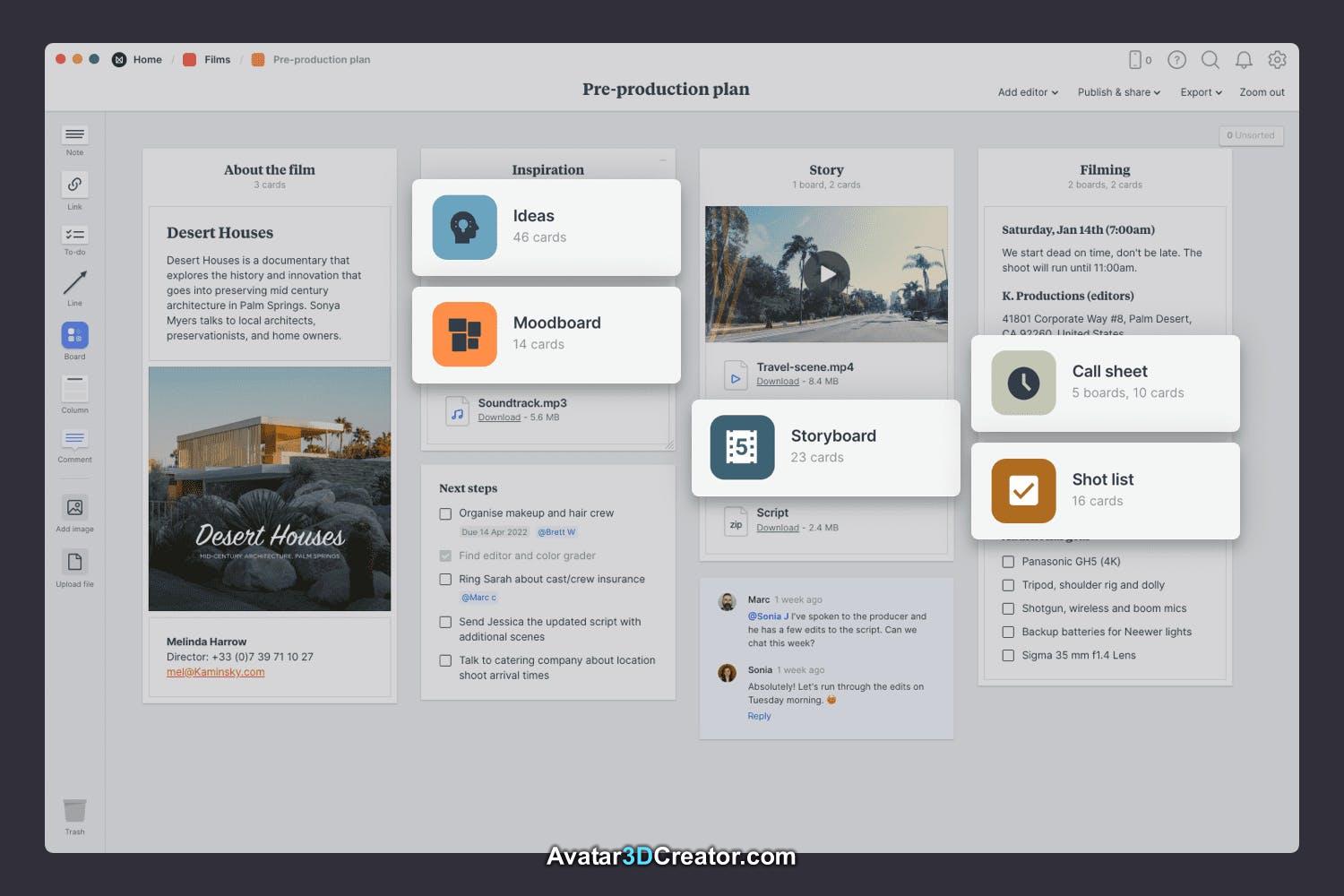
传统上, 项目计划可能分散在不同的电子邮件中, 待办事项清单, 电子表格, 和文件, 使得追踪一切变得困难. 一项中央项目计划将这些工件组合到一个易于访问的地方. 它会在项目的整个生命周期中不断发展,但通常包括:
- 剧本
- 你的想法
- 灵感和情绪板
- 故事板
- 拍摄时间和地点
- 拍摄列表
- 工作流程清单
- 装备清单
如何在米兰诺特执行此操作
- 为您的电影项目计划创建一个新板告诉我如何做
- 选择前期制作计划 模板告诉我如何做
2. 头脑风暴
将最初的想法转变为伟大的事情
每部电影的诞生都是一个转瞬即逝的想法——只是一个火花. 在这个阶段,你需要利用你的创造力并将这个想法变成现实. 头脑风暴是这项工作的完美技巧.
头脑风暴是一种经典的创意技巧,可以帮助您在几分钟内产生大量想法. 您可以用它来探索电影的主题, 构思新角色, 地点, 甚至是您所追求的视觉风格. 最好将其视为点燃我们想象力的一种方式. 正如古代哲学家普鲁塔克所说, “头脑不是一个需要被填充的容器, 但有待点燃的火。”
第一的, 打开创意板
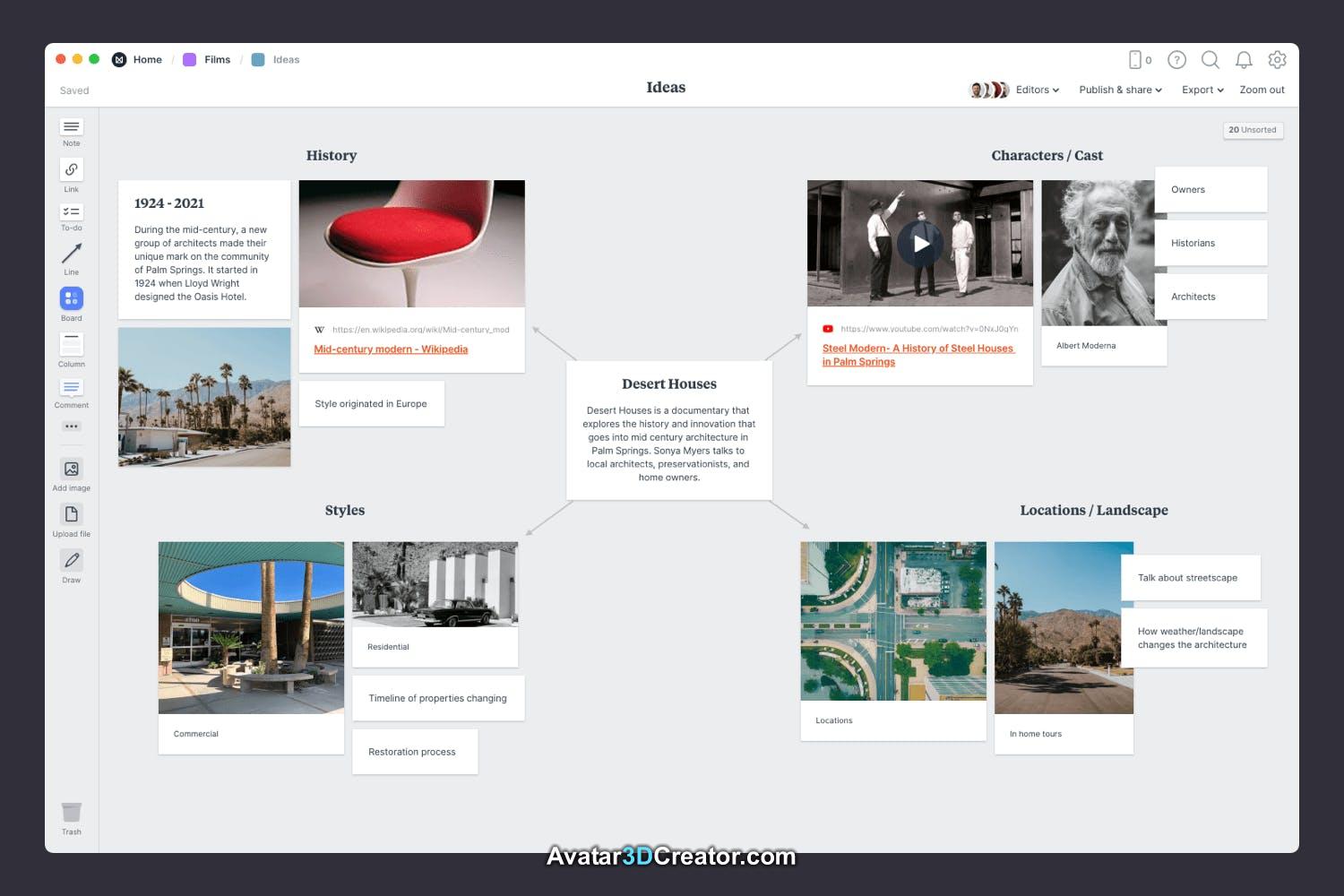
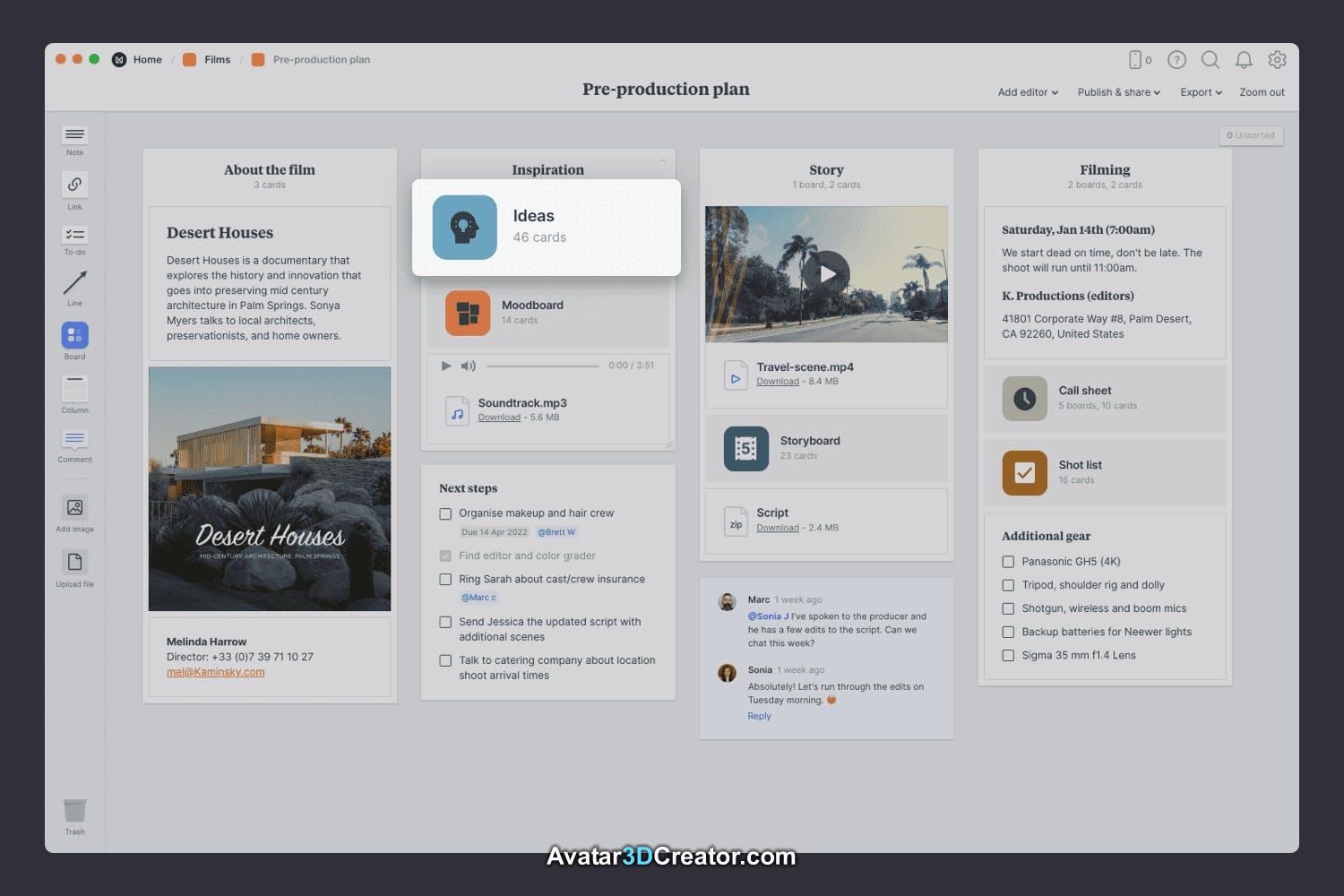
您可以在预制作计划板上找到集思广益的板子. 双击创意板将其打开并开始集思广益.
如何在米兰诺特执行此操作
- 双击想法 打开它的板.
从电影的中心思想开始
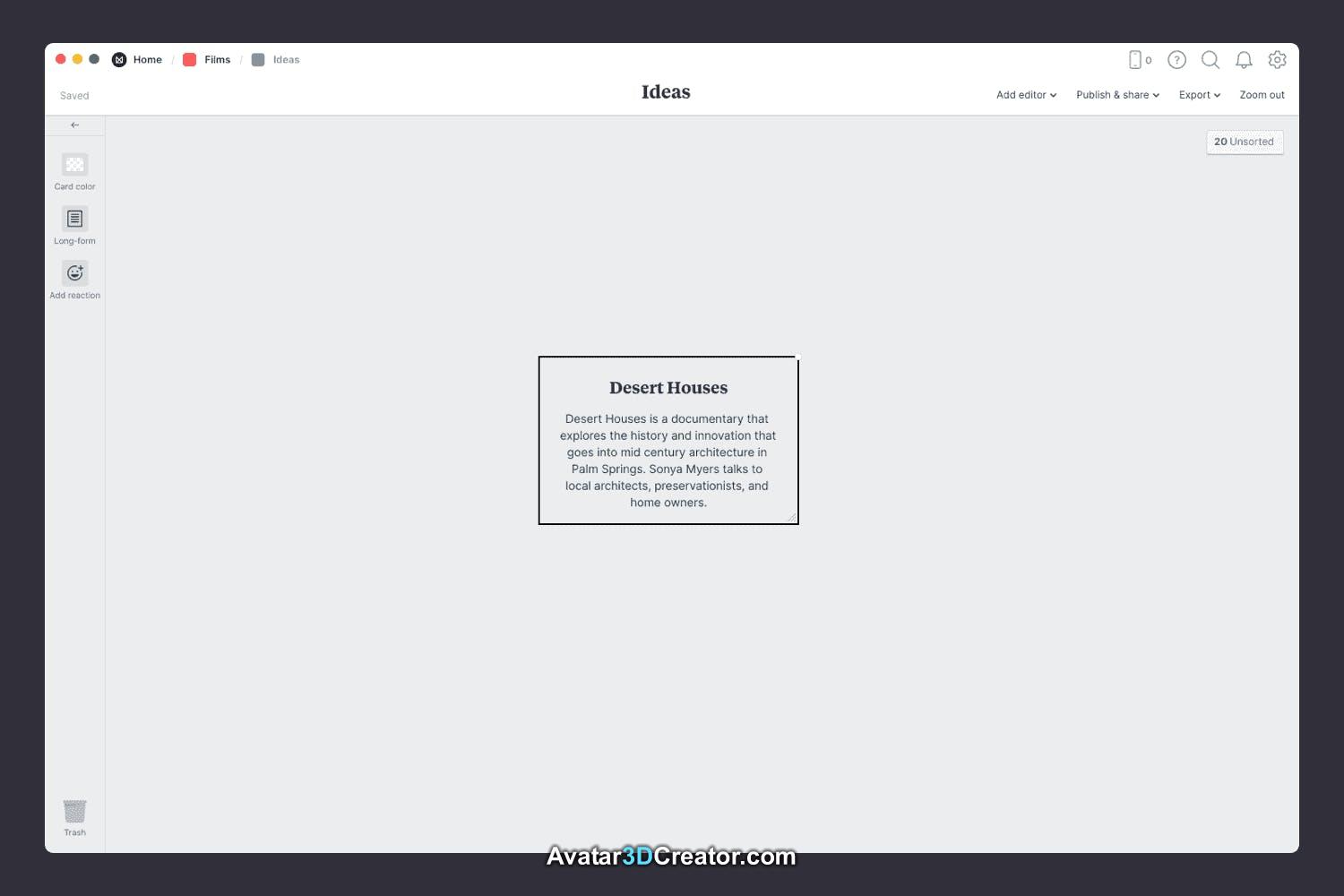
你的电影的想法或概念是什么? 这是你的起点. 目前这可能只是一个粗略的想法,或者是您想要探索的主题, 但这个过程将帮助你了解你能走多远. 添加描述电影的注释 1 到 2 开始的句子.
如何在米兰诺特执行此操作
- 添加注释来描述您的电影的概念。告诉我如何做
提示:
您最初的想法不必是开创性的, 随着时间的推移你会改变它. 正如史蒂文·斯皮尔伯格所说 “所有好主意都是从坏主意开始的, 这就是为什么需要这么长时间。”
添加尽可能多的想法
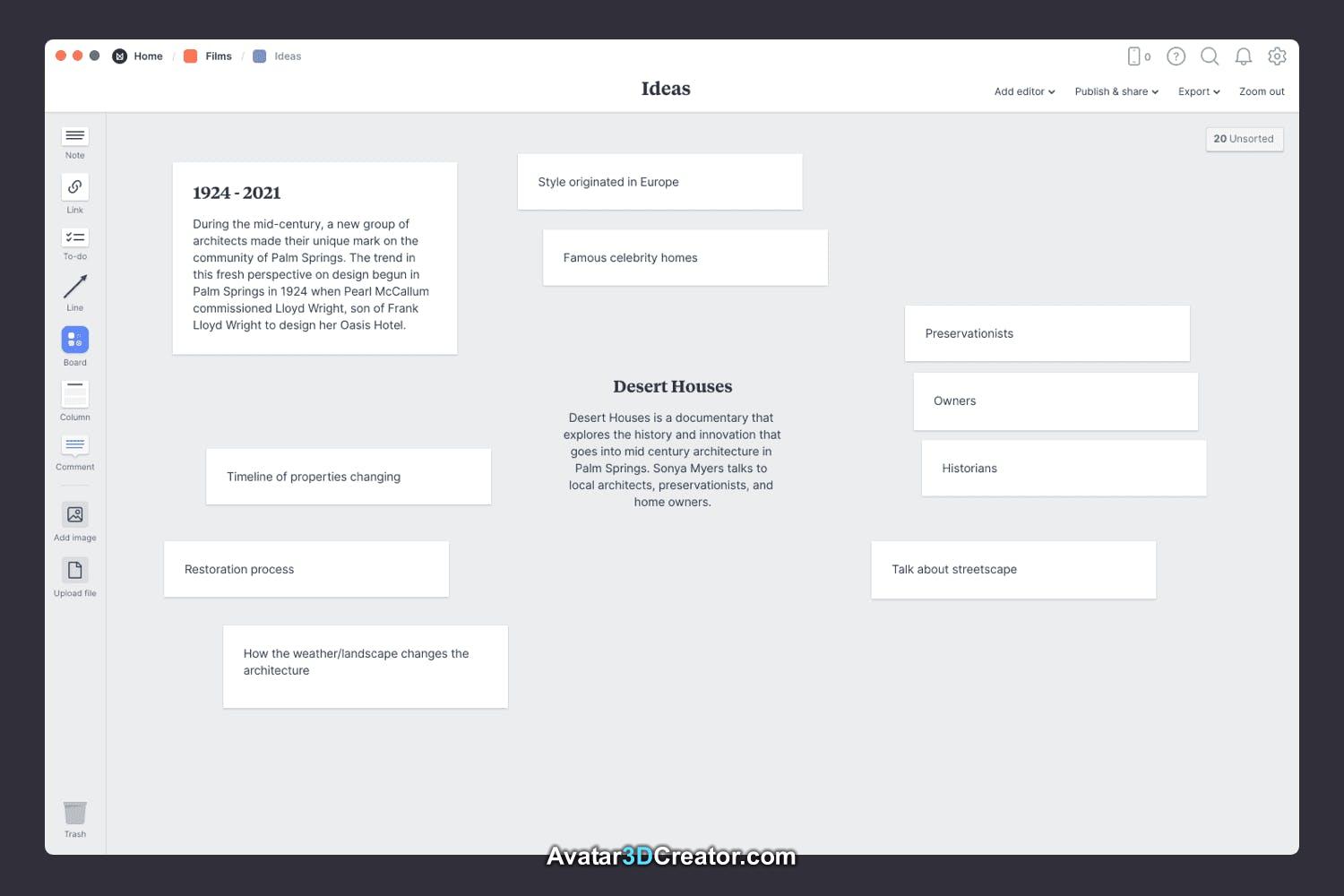
现在是时候发挥创意了. 邀请您的团队并开始添加与您的初始概念相关的任何想法. 想想人物, 他们的关系, 您可以使用的位置, 视觉风格, 以及该主题的历史. 探索每一个线程,直到填满整个面板.
暂时不用担心评估您的想法, 稍后会发生. 设置定时器 5 分钟是营造紧迫感并防止人们评判自己想法的好方法.
如何在米兰诺特执行此操作
- 邀请其他人添加他们的想法。告诉我如何做
- 为每个想法添加注释。告诉我如何做
添加鼓舞人心的图像, 运动 & 声音
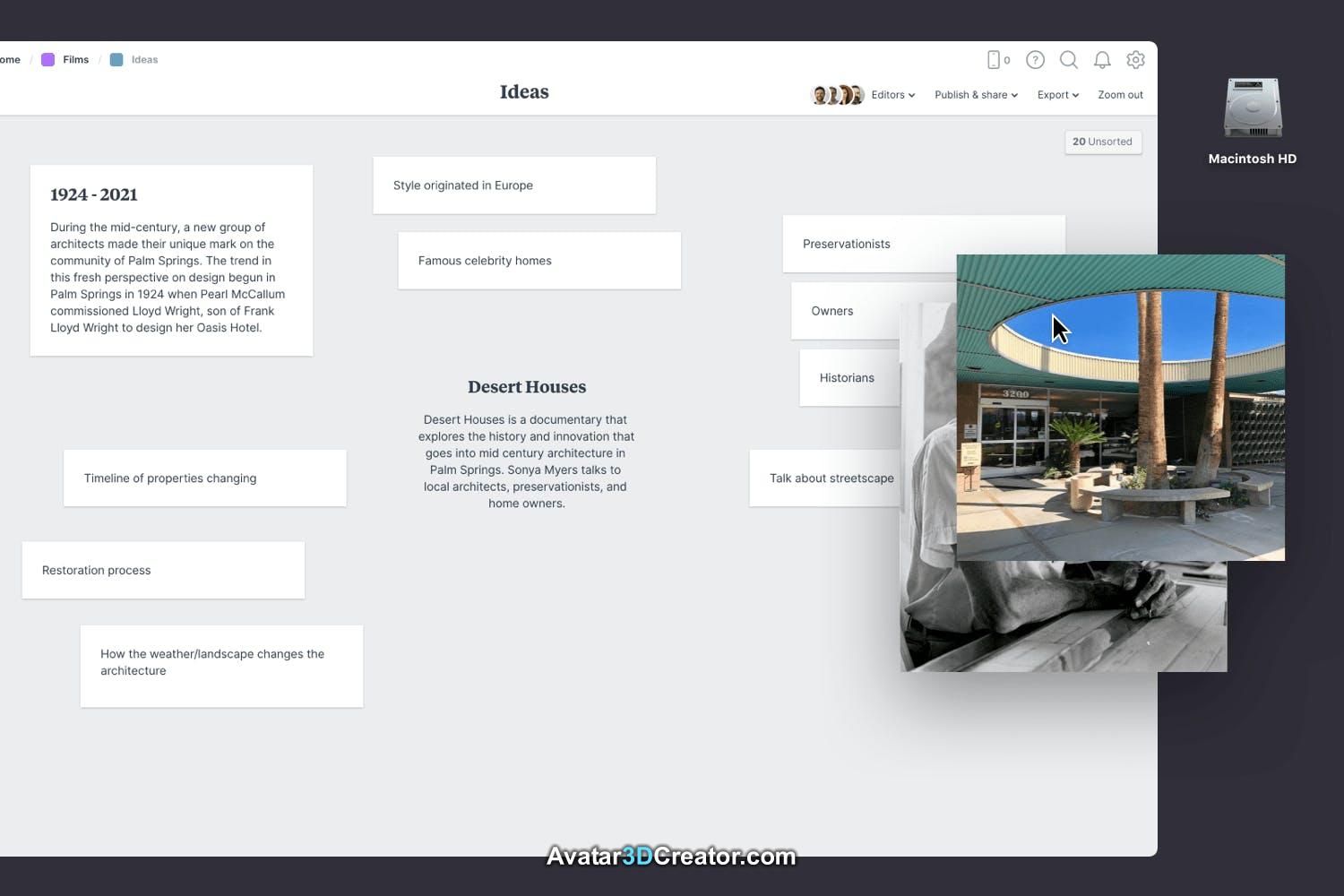
有时通过图像或视频更容易传达想法, 尤其是当你想表达一种心情或风格时. 收集参考图像, 视频和声音并将它们添加到混合中. 这些可以成为一个基础情绪板 随着你的电影项目的发展.
如何在米兰诺特执行此操作
- 使用内置图像库。告诉我如何操作
- 将图像从计算机拖到板上。告诉我如何操作
最后, 将您的想法整理成主题
当你探索完每一个想法后, 下一步是建立联系. 这就是你看到头脑风暴的魔力的地方!
首先将相似的想法分组,以发现您的思维模式. 为每个组添加标题,以便于扫描. 您可能会发现您的想法像角色一样分为不同的组, 服装, 地点或美学,但没有关于如何做的规则.
你已经完成了头脑风暴
现在您的头脑风暴会议已经完成, 你为你的电影打下了坚实的基础! 记住, 正如创造力和灵感不断演变一样, 想法也是如此. 当灵感袭来时,回来加入头脑风暴, 或在启动脚本时参考它.
3. 情绪板
整理灵感 & 参考
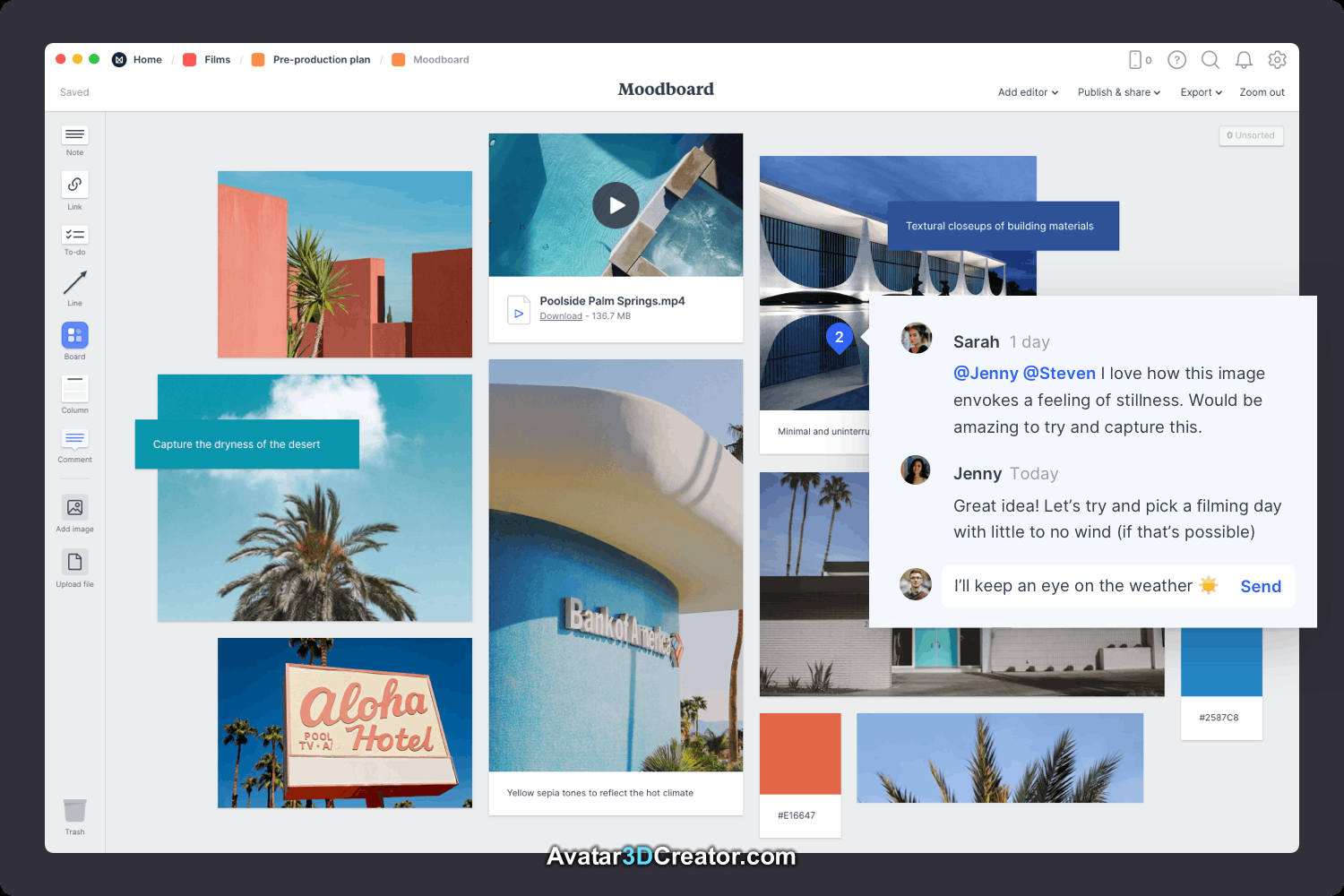
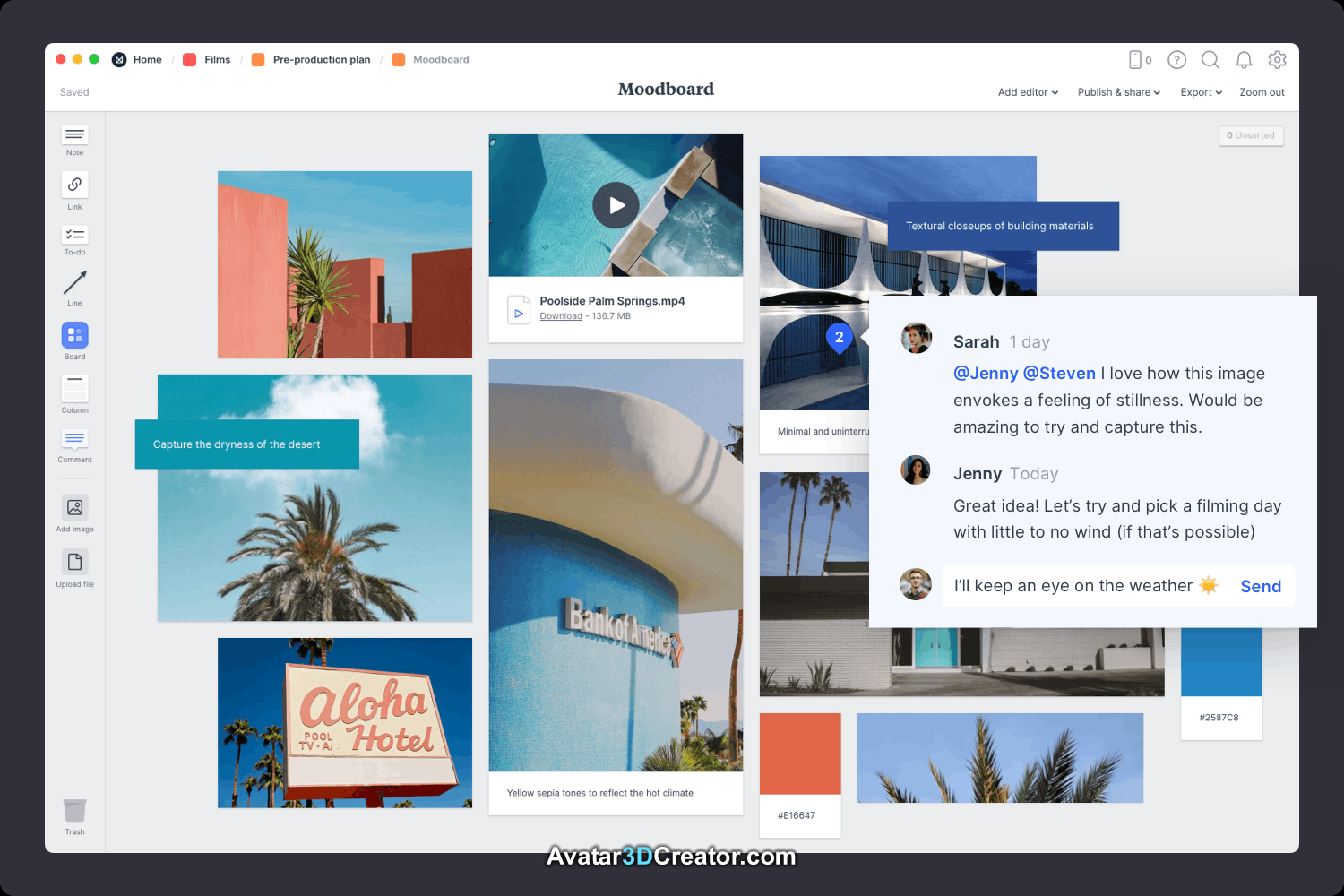
头脑风暴期间, 你想象了电影的不同部分. 是时候开始使用情绪板探索一些视觉方向了。情绪板 可以帮助您形象化电影的任何方面. You might want to focus on how the lighting or color could look. Or they could be centered around the set designs or costumes you want to use. You can create a moodboard for each of these separately or mix them all into one board. There are no strict rules.
Your moodboard will also be a fantastic reference for your team—from the director to the costume designer—it helps everyone visualize the end result.
第一的, open the Moodboard
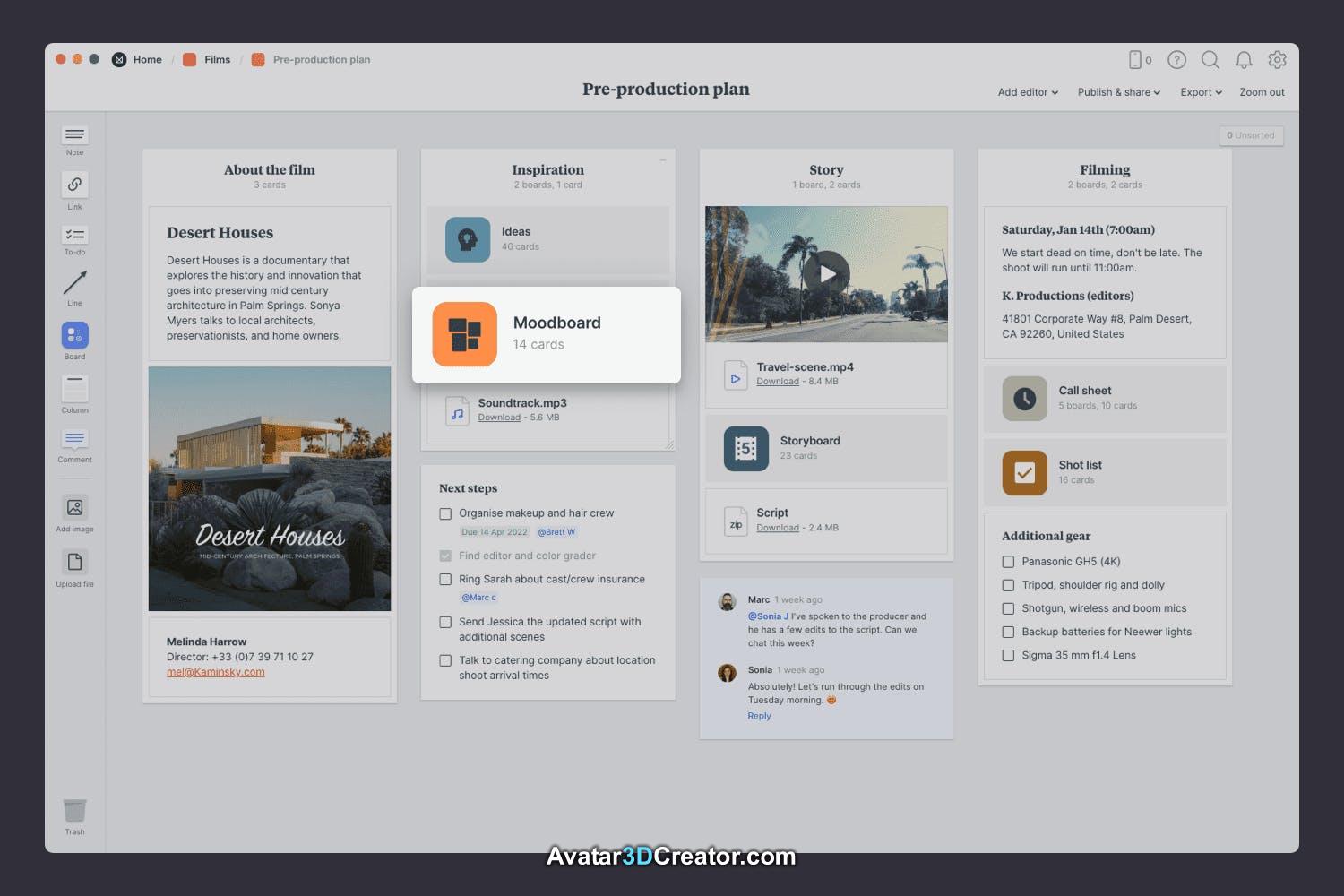
You’ll find the board to make your moodboard on the Pre-production Plan board. Double click on the Moodboard to open it and start adding your inspiration.
如何在米兰诺特执行此操作
- 双击情绪板 to open it.
Collect existing material
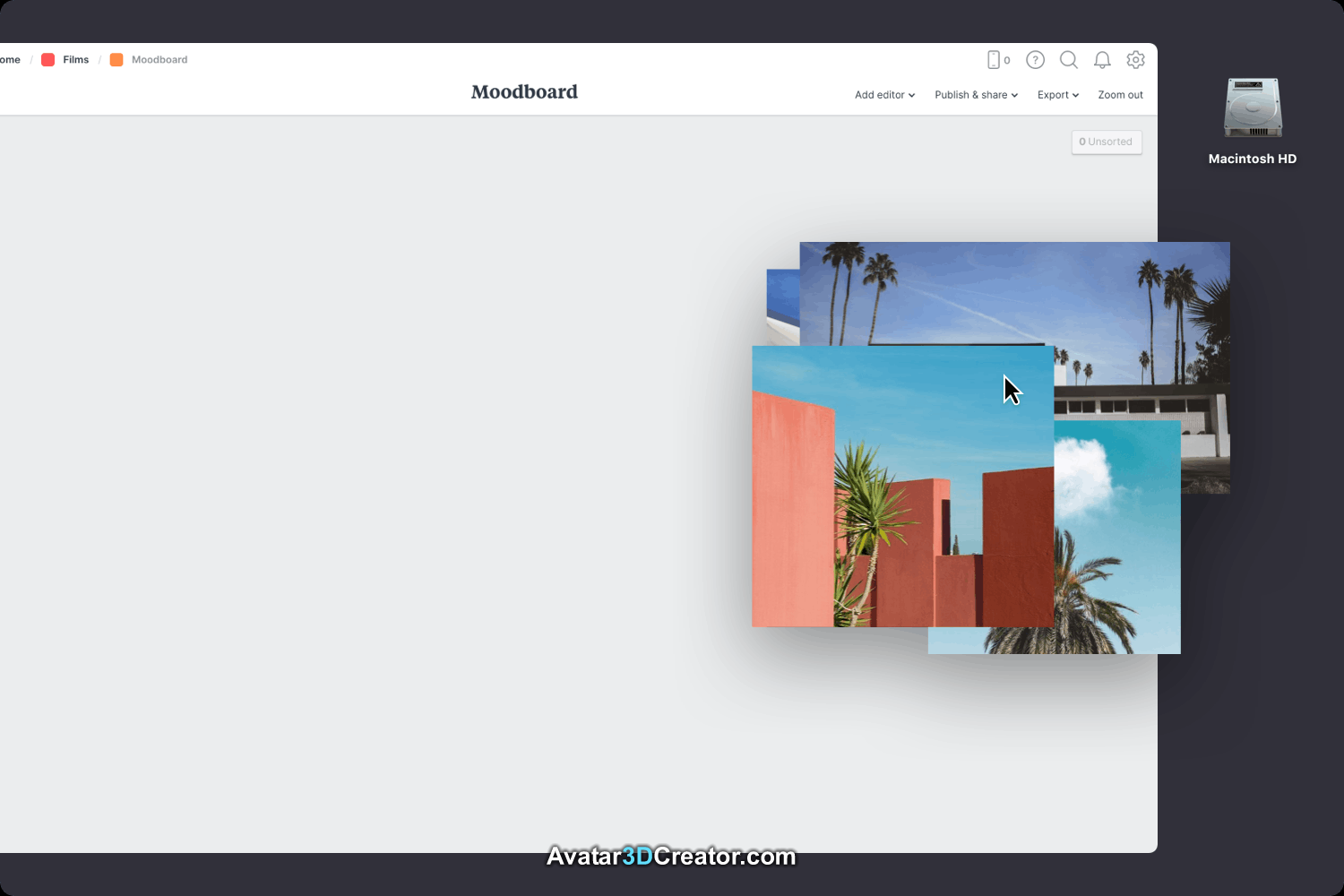
Start by adding any existing material you have—this could include stills from previous shoots, client references or images you’ve saved as inspiration. These might not make it into the final moodboard, but they’re still a great place to start.
如何在米兰诺特执行此操作
- Drag files from your computer.Show me how
添加鼓舞人心的图像
The imagery you bring into your moodboard helps you express your film’s look and feel. Images can define things like tone, cropping, lighting and color.
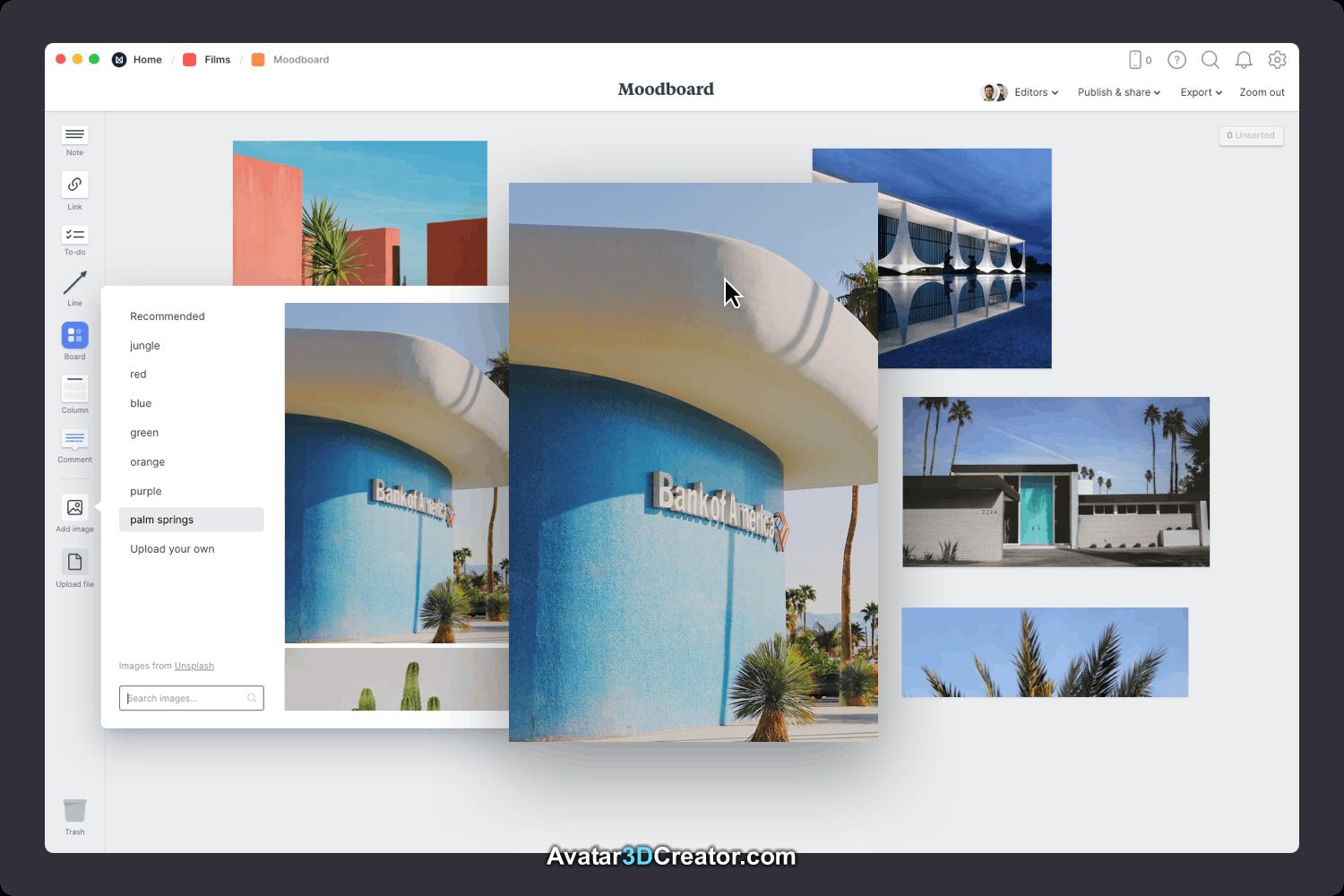
You can start by saving visual references from around the web. There are lots of fantastic sites where you can find great visual inspiration for free, likeShotdeck, Instagram, 或者兴趣. Don’t worry about organizing the images just yet, that step will come later.
如何在米兰诺特执行此操作
- 使用内置图像库。告诉我如何操作
- Install theMilanote Web Clipper
- Save images from other websites straight to your board.Show me how
Transform your board from messy to organized
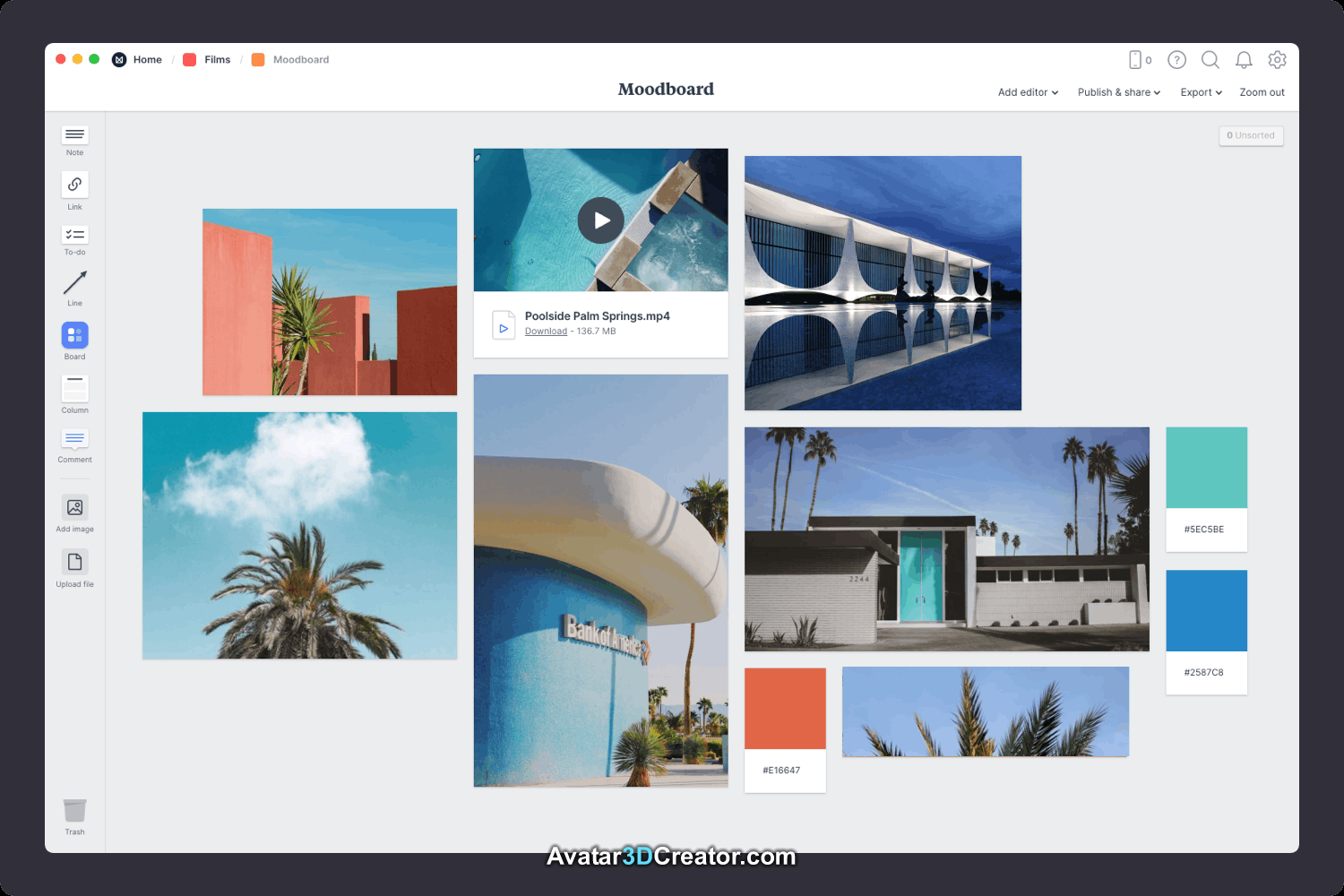
Once you have all your inspiration in one place, the next step is to arrange your ideas to create the perfect layout. Start by exploring composition and introducing hierarchy. Place a key element to anchor your board, and change the size and position of the remaining elements to indicate their importance and relationships to one another.
如何在米兰诺特执行此操作
- Resize your images to add hierarchy.Show me how
- Crop images.Show me how
You’ve finished the moodboard!
Now that your moodboard is complete, you have a powerful visual reference for your film. 记住, you can create multiple moodboards to explore different directions at any time.
下一个, we’ll create a storyboard to map out the key parts of your film.
4. 故事板
可视化电影的关键部分
故事板 are a powerful way to visually organize the composition, action and look of a film before you start bringing it to life. As director, producer and screenwriter Martin Scorsese said, “The storyboard is the way to visualize the entire movie in advance.”
Many people devote their entire careers to storyboarding as it combines disciplines and techniques such as illustration, writing and production. 传统上, a storyboard would be created with analog sketches, but with a modern digital tool you can use photography, animation, color and notes to highlight key characters, scenes and objects.
Storyboards aren’t just for understanding scenes; they can also be used for a variety of other reasons including:
- Visual Planning: Organize the order of a story and flow before filming.
- Pacing and Timing: Control the narrative’s speed.
- Visual Composition: Experiment with shots and angles.
- Pre-visualization: Preview complex scenes or effects.
- Resource Planning: Plan props, sets, and wardrobes more efficiently.
- Collaboration: Align efforts so the crew is working toward the same goal.
- Presentations: Convey ideas to clients, investors, and the director.
- Problem Solving: Identify and address any issues before filming starts.
- Continuity: Maintain uniformity in style and design throughout the film.
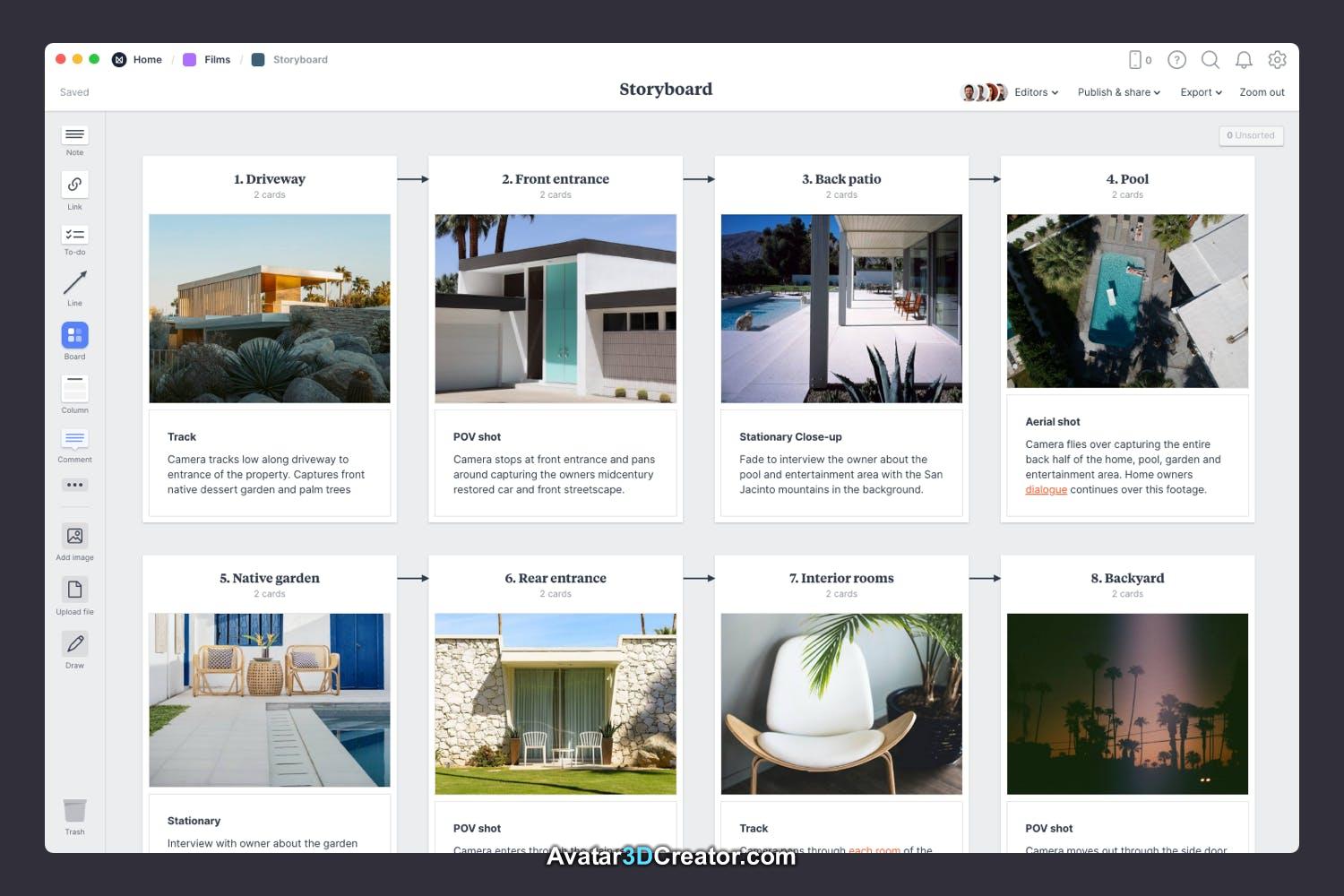
第一的, open the storyboard
You’ll find the empty Storyboard on the Pre-Production Plan board. Double click the Storyboard to open it and start adding the mapping out the key scenes.
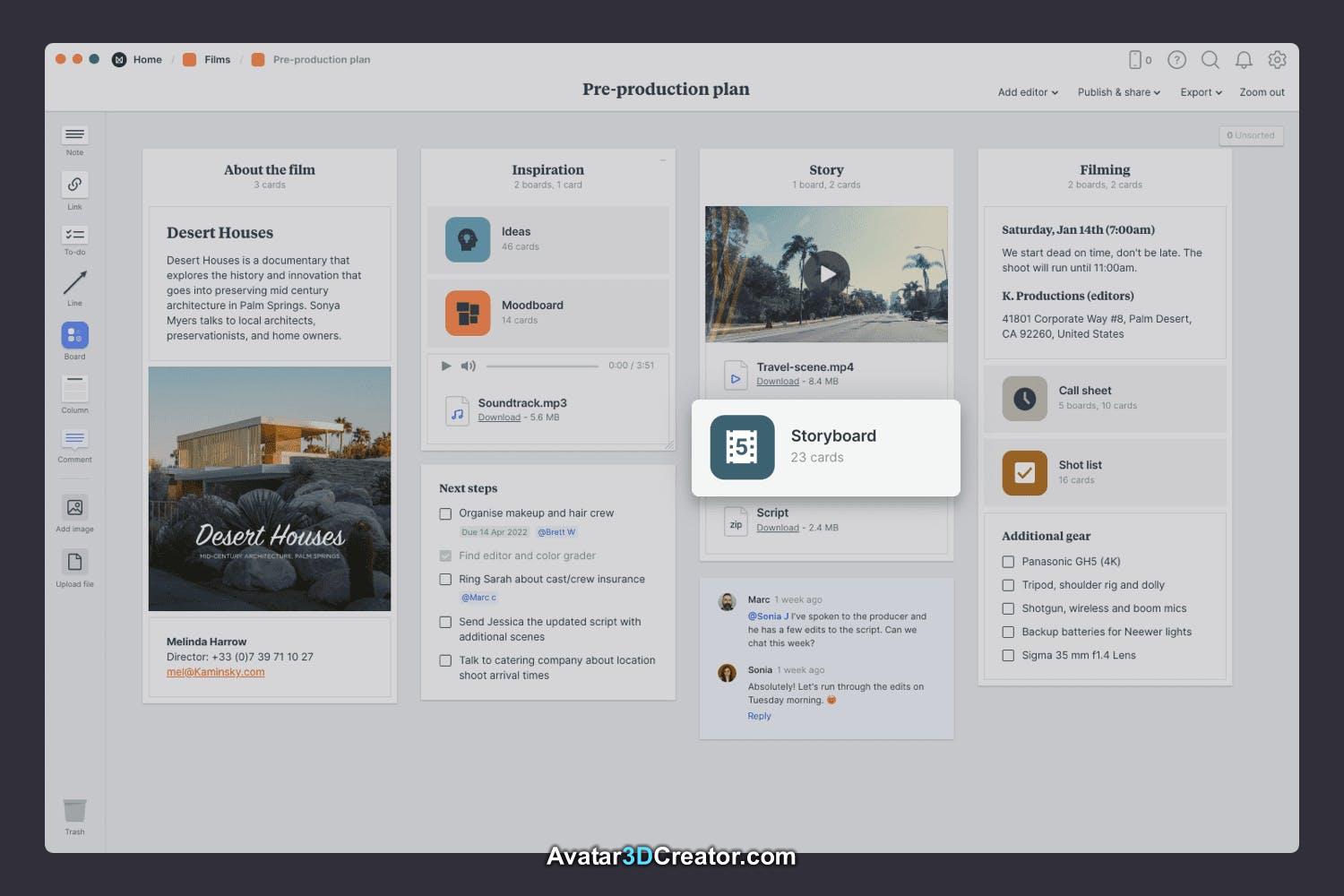
如何在米兰诺特执行此操作
- 双击故事板 to open it.
Map out the key scenes
When creating a storyboard, it’s crucial to know what story you’re telling. They’re a great way to break up the script or narrative into pieces to understand what you’re trying to achieve when filming.
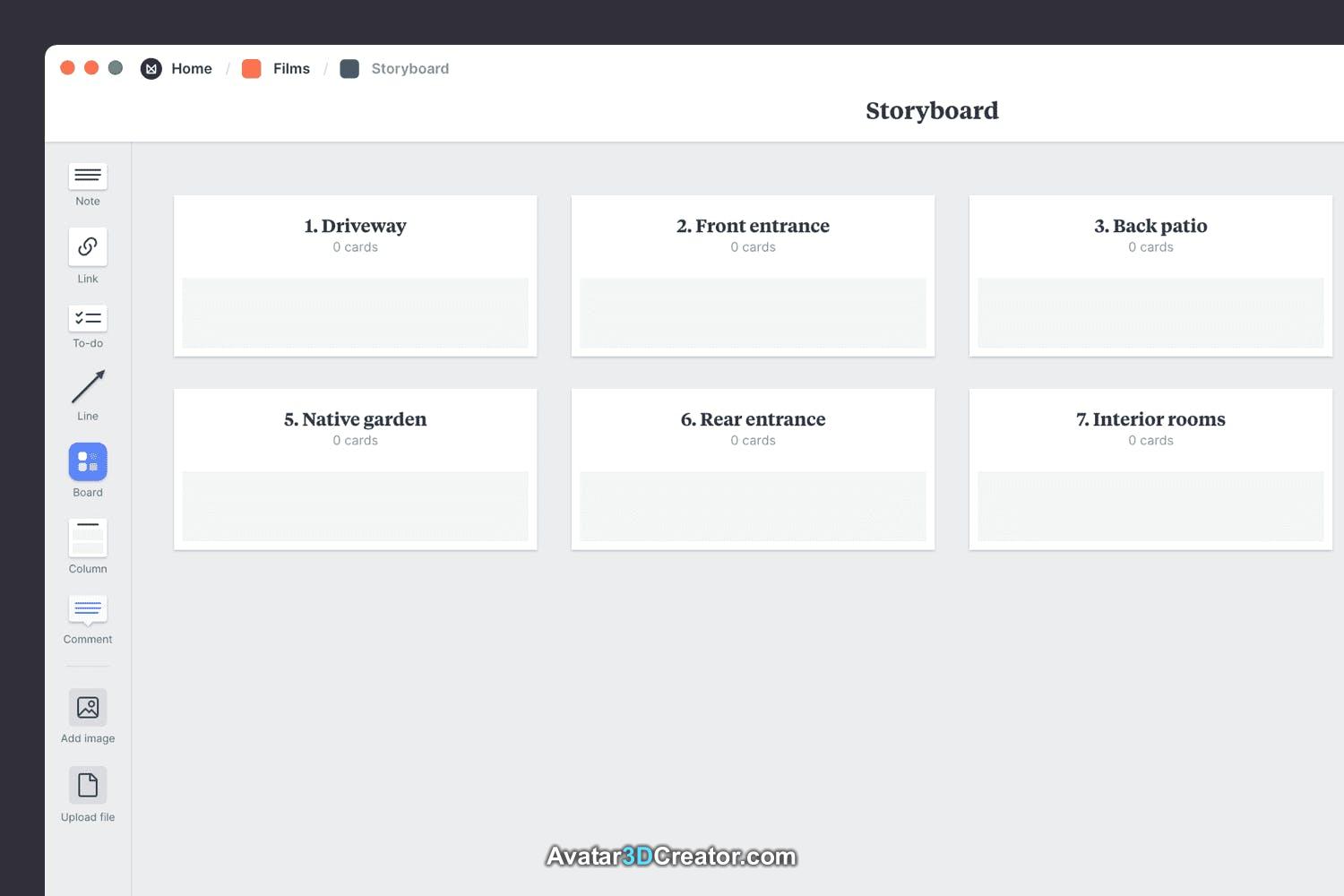
如何在米兰诺特执行此操作
- Add a column for each frame.Show me how
Add images or sketches
Now it’s time to begin visualizing each scene. Some storyboard artists might begin sketching with a pen and paper first, but you can use reference photography, illustrations, screenshots, location shoots, and even motion to communicate each scene.
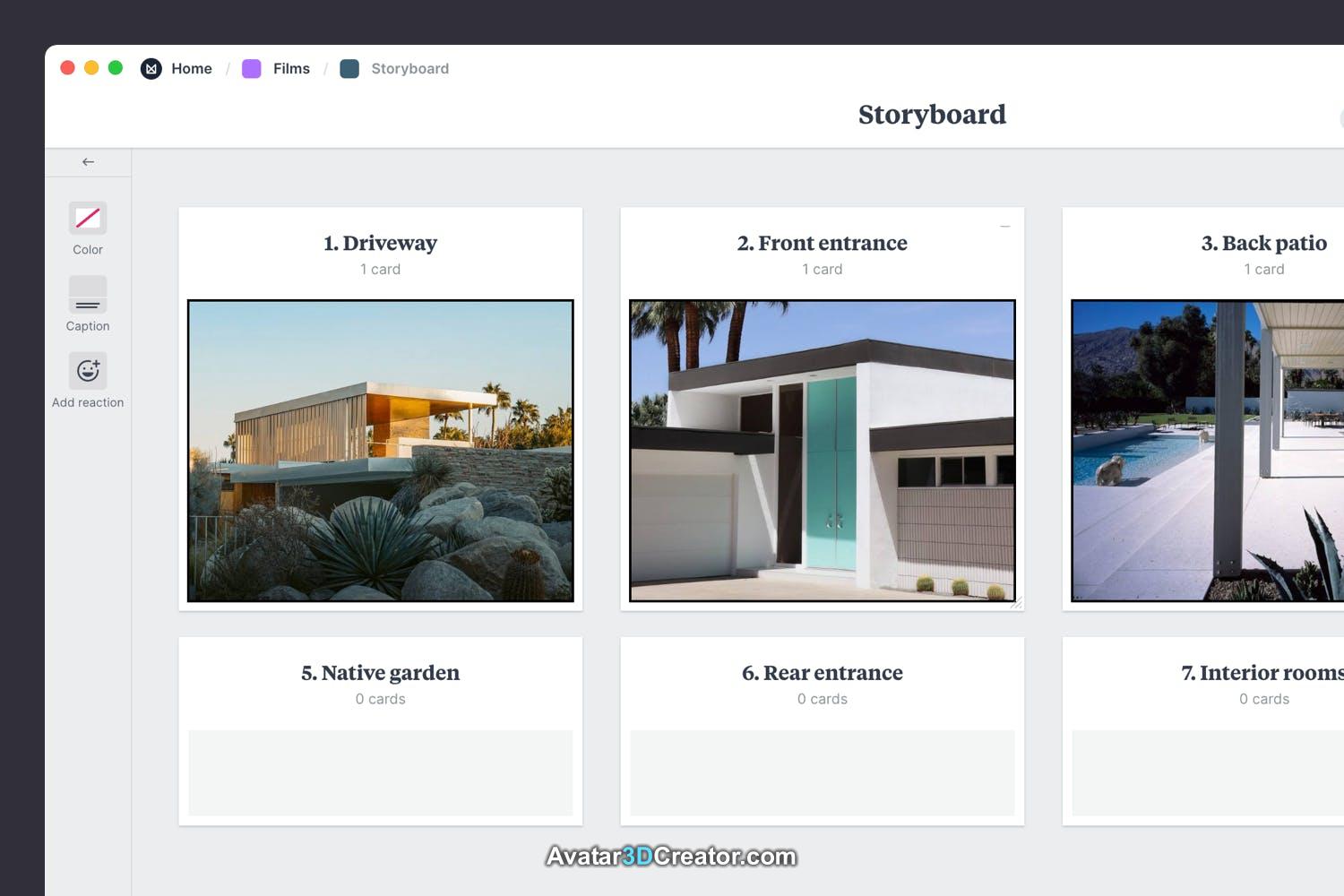
如何在米兰诺特执行此操作
- Upload images for each frame.Show me how
- 使用内置图像库。告诉我如何操作
Describe what happens in each frame
While each frame is a static image, try to communicate how it’s going to look and feel as a moving sequence. Describe the style, mood, and behavior of characters. Consider how the camera will move through the shot and how you’ll transition from scene to scene. Add details about the sound to help your team imagine the emotion and drama you’re trying to capture.
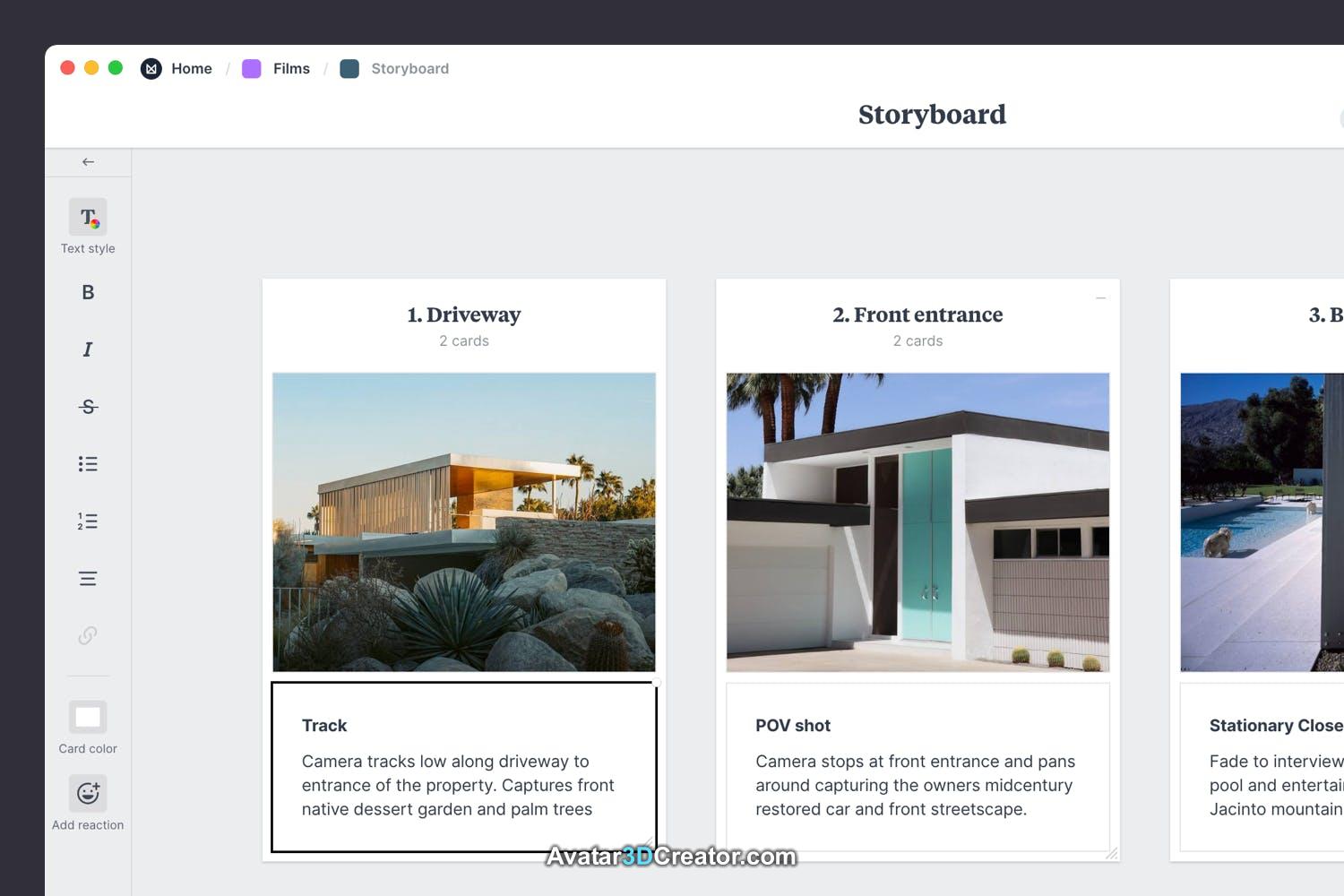
如何在米兰诺特执行此操作
- Add a note to describe each frame.Show me how
Share it with your team
When you’re ready, invite your team to review your storyboard and share their feedback. This is the perfect moment to see how others interpret your vision for the story. It’s also a great opportunity to make any final tweaks while in pre-production. Adjust the order of your frames or edit the content based on everyone’s feedback.
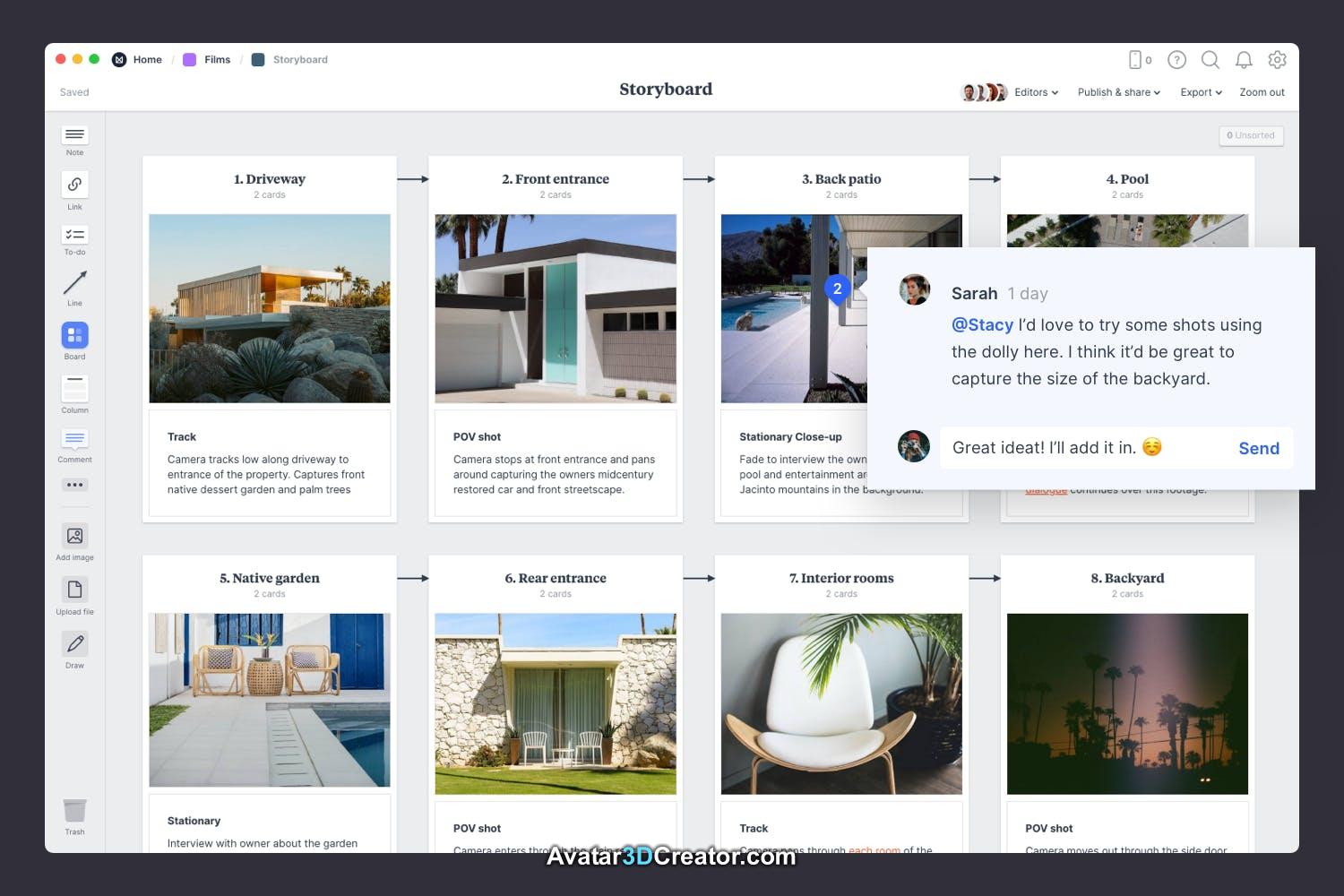
如何在米兰诺特执行此操作
- Share the storyboard with your team.Show me how
- Start a comment thread.Show me how
- Mention teammates to get their attention.Show me how
Your storyboard is done!
Now that your storyboard is complete, you have a clear vision for your film! Let’s move on and create a shot list to plan the scenes you’ll shoot during production.
5. 拍摄清单
计划您需要的每次拍摄
Coordinating a shoot can be stressful and costly, especially if that critical shot is missed on the day. But a clearly defined shot list will make sure nothing slips through the cracks.
一个shot list is a simple checklist of each shot (or scene) you need to capture on the day of a shoot. It usually contains a list of specific shots, some visual references and extra details like camera angles or lighting set-up so you don’t forget a thing.
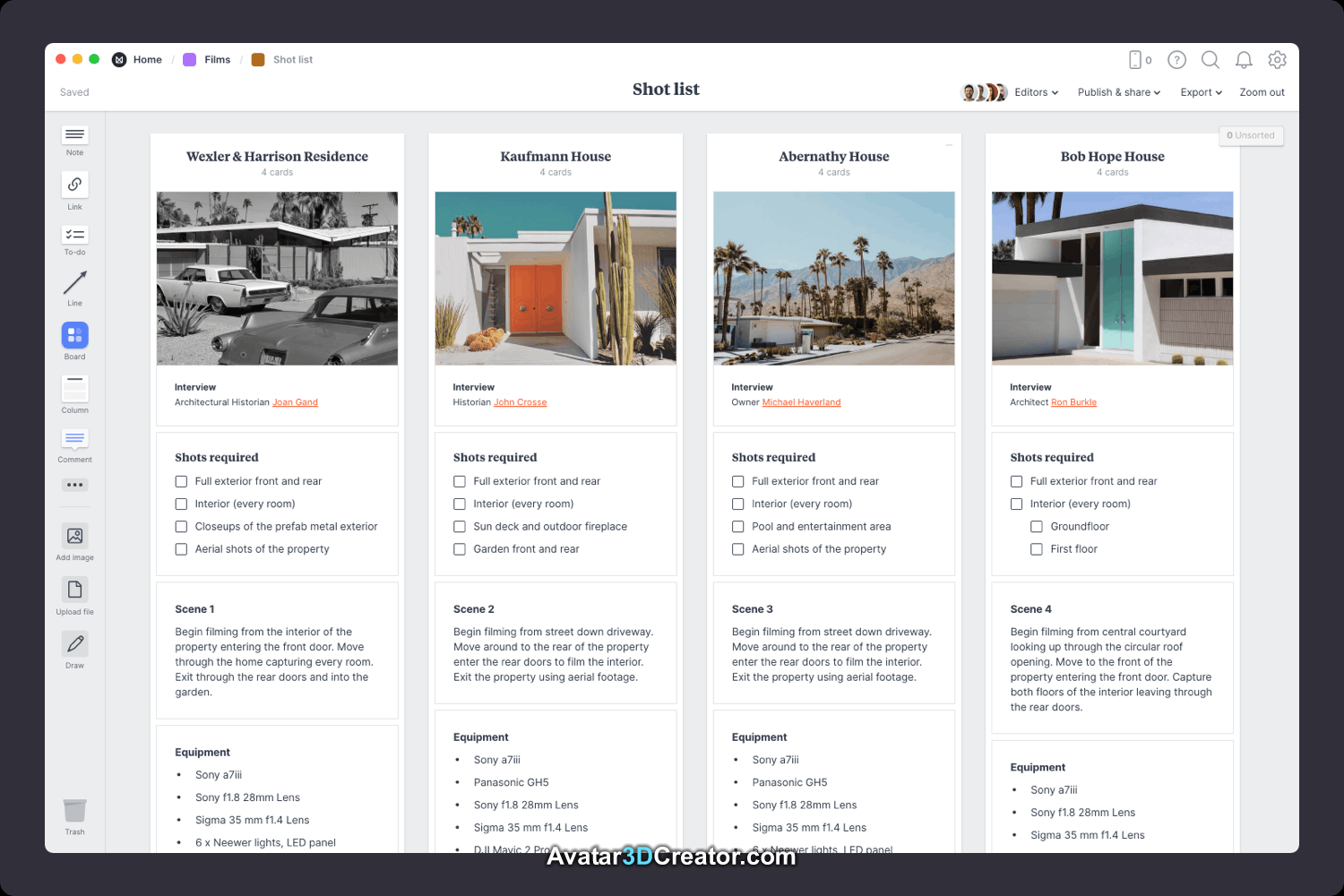
第一的, open the shot list board
You’ll find the board to make your shot list on the Film plan board. Double click on the Shot List to open it and get started.
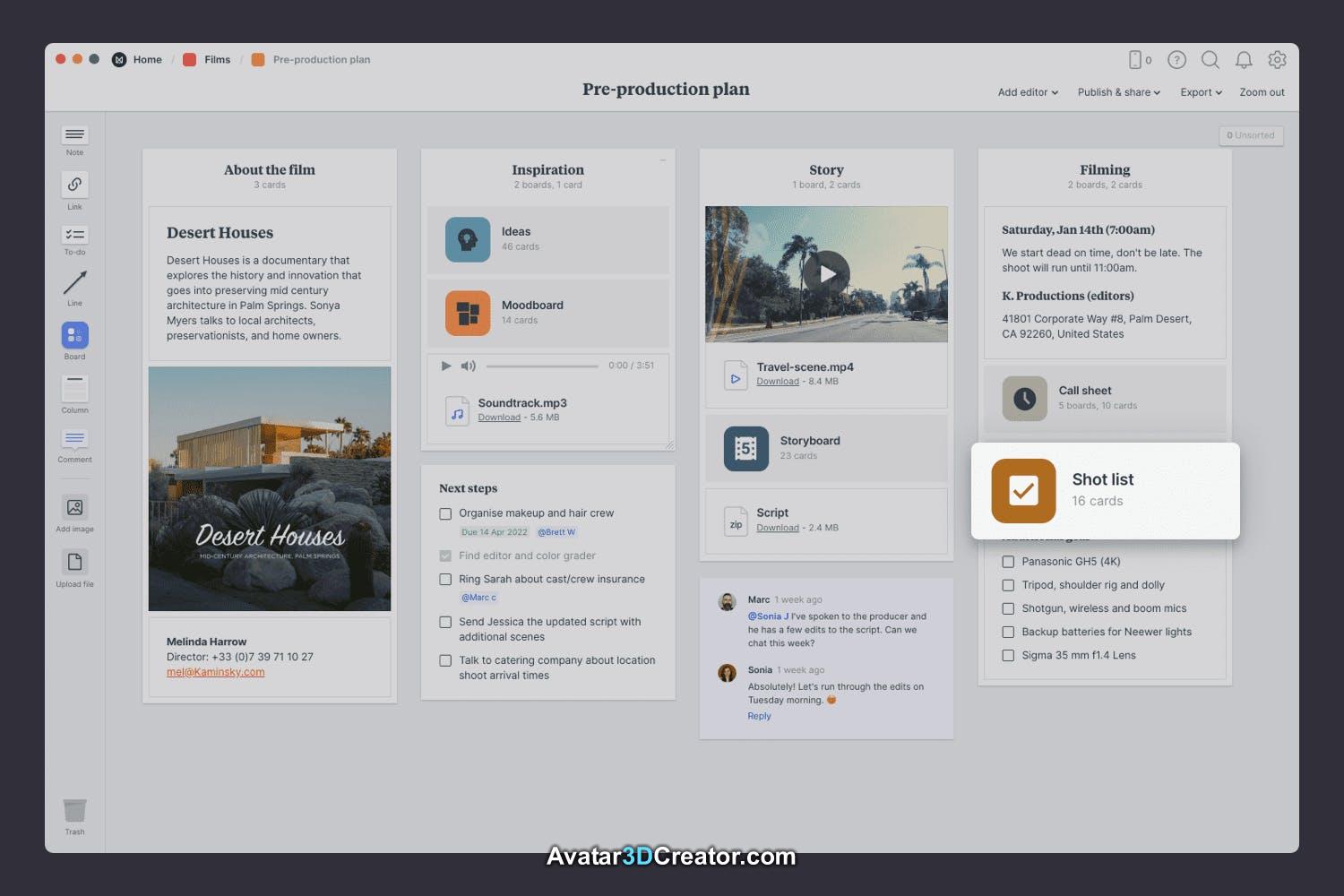
如何在米兰诺特执行此操作
- 双击Shot List 打开它的板.
List the things you’re shooting
Start by listing the main scenes you’ll be filming. Adding reference images or sketches will make your shot list easier to scan—even if they’re just rough photos you’ve taken on your phone. It will also help your crew visualize the type of shots you’re planning to capture.
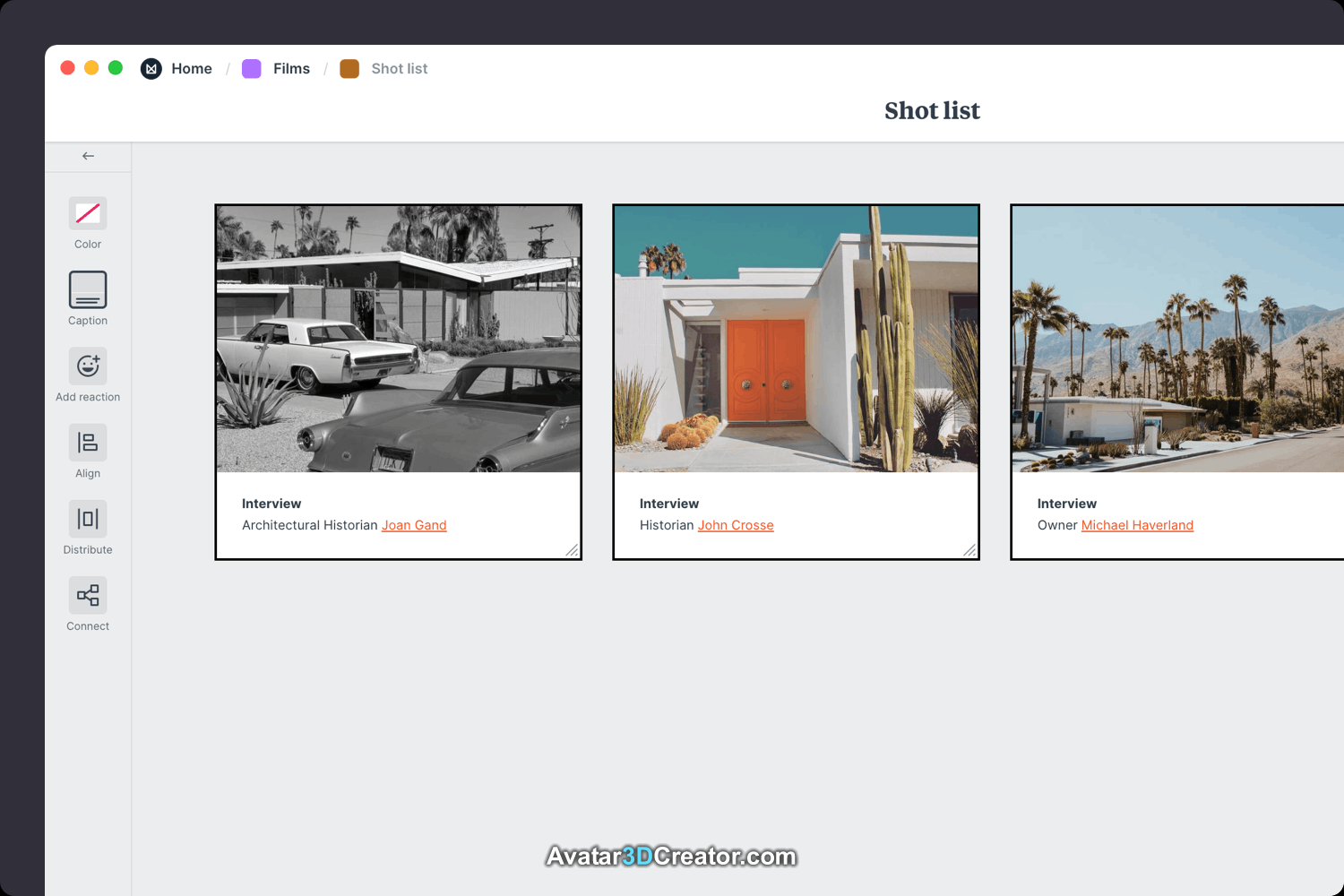
如何在米兰诺特执行此操作
- Upload images to your board.Show me how
List the individual shots you need
This is the heart of the shot list. It’s where you list each individual shot you require. Some details to include are: camera angle, location, position of the camera, and shot size (how big or small the subject is in the frame).
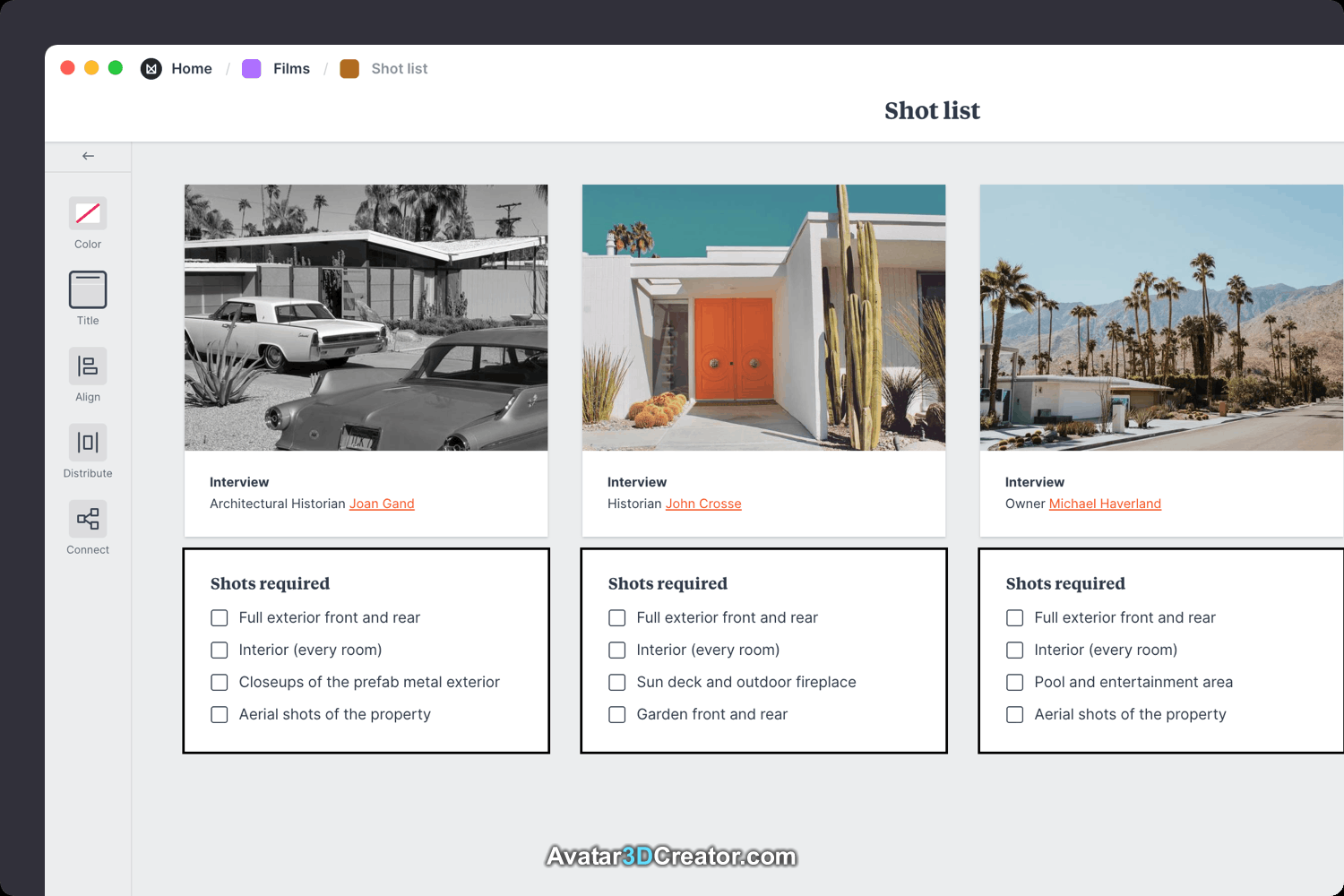
如何在米兰诺特执行此操作
- Create a new to-do list for each of the specific shots.Show me how
Add a simple gear list
What equipment will you need to shoot these scenes? Imagine being half way through filming when you realize the spare battery pack is still in the studio. Adding a simple gear list will ensure you have everything you need on the day. It’s a lifesaver!
Use theFilm Production Equipment List template if you have lots of gear to keep track of.
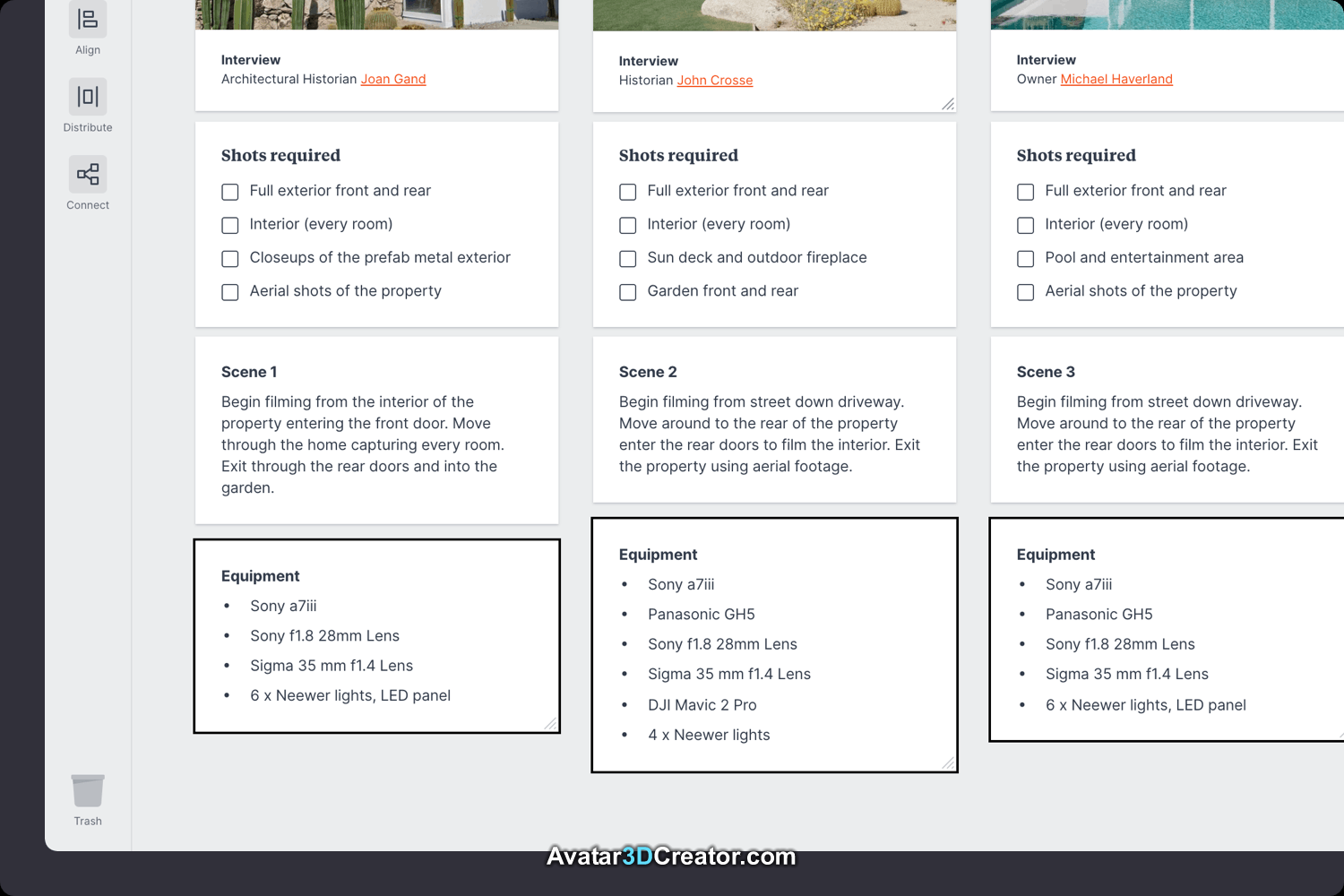
如何在米兰诺特执行此操作
- Add a note to list your equipmentShow me how
Reference it on the day
传统上, you’d print out your shot list to refer to on the day, but digital shot lists can be accessed onphones or laptops. This way, you can check off each shot or adjust it as you need.
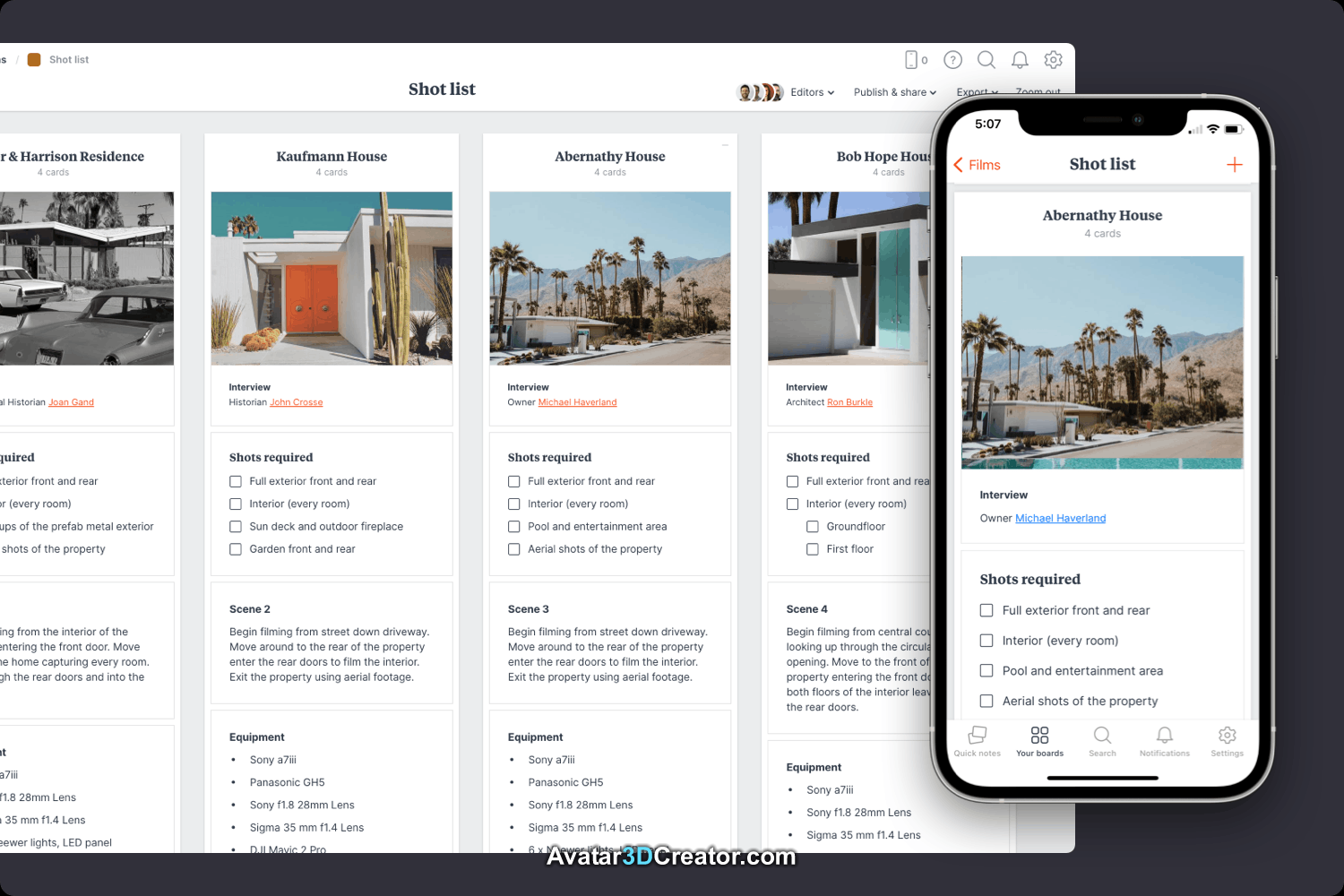
如何在米兰诺特执行此操作
- Download the Milanote mobile app
You’ve finished the shot list!
Now that your shot list is complete, you have a clear plan for the scenes you need to capture during the shoot.
下一个, we’ll create a call sheet to schedule your team…
6. 征集表
组织你的船员 & 天赋
You may have witnessed a disorganized shoot before—the actors were late, the crew forgot the lighting or the set wasn’t ready. One vital document was missing—the call sheet.
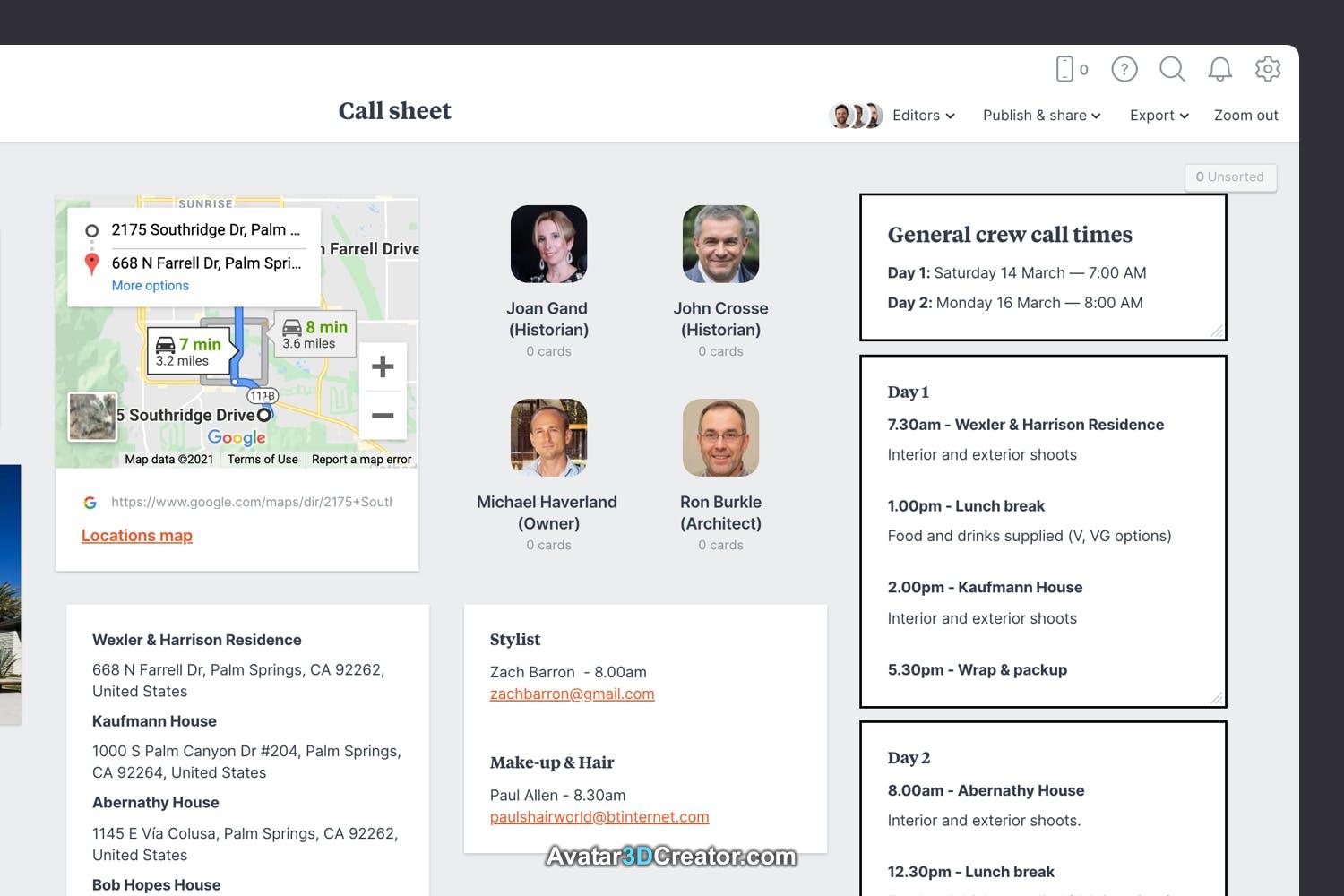
Thecall sheet is a simple, but incredibly useful tool for organizing your shoot. It outlines everything your talent and crew need to know before the day of the shoot. Crucial elements like the location, contact details, the schedule, and most importantly the arrival time.
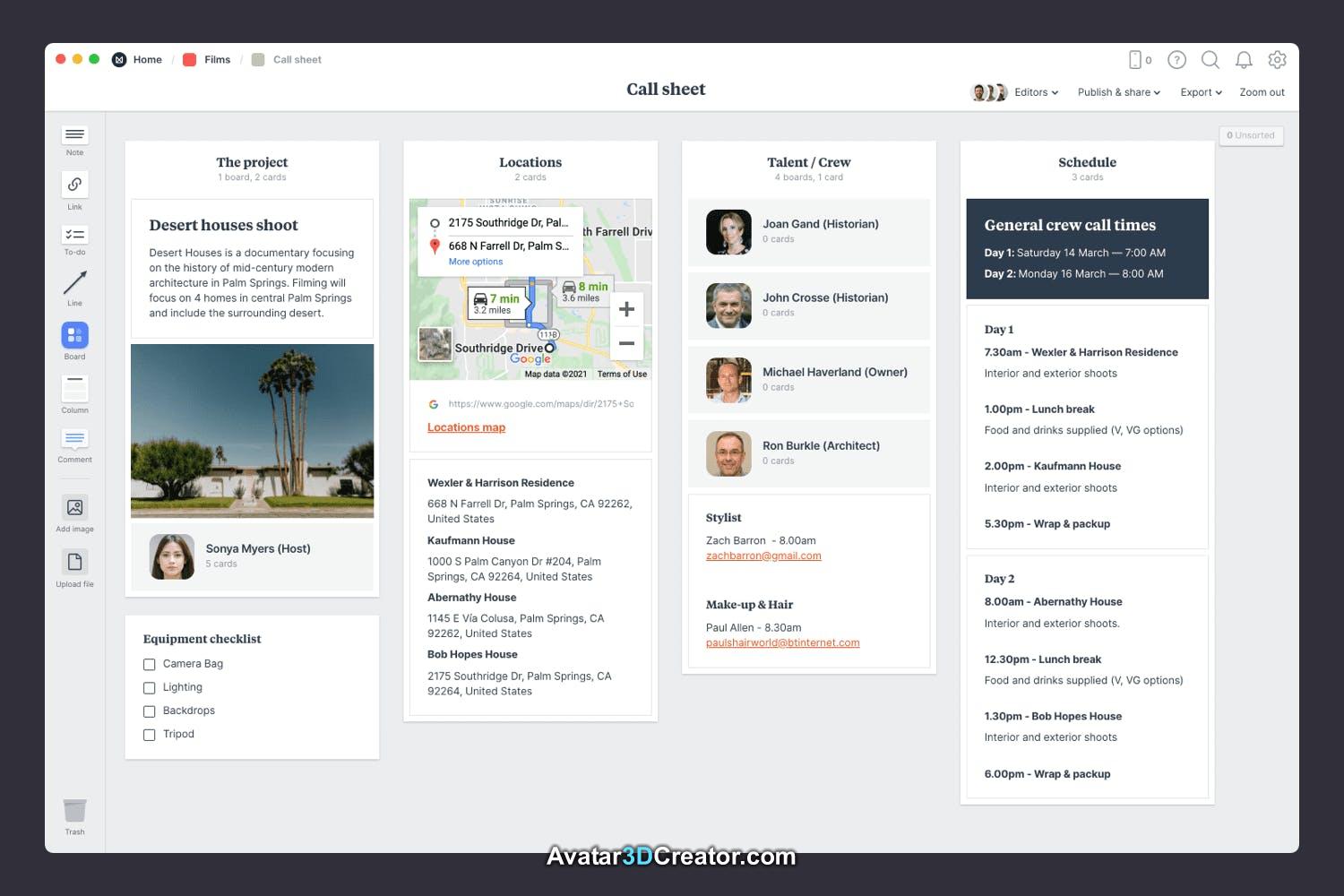
第一的, open the Call Sheet board
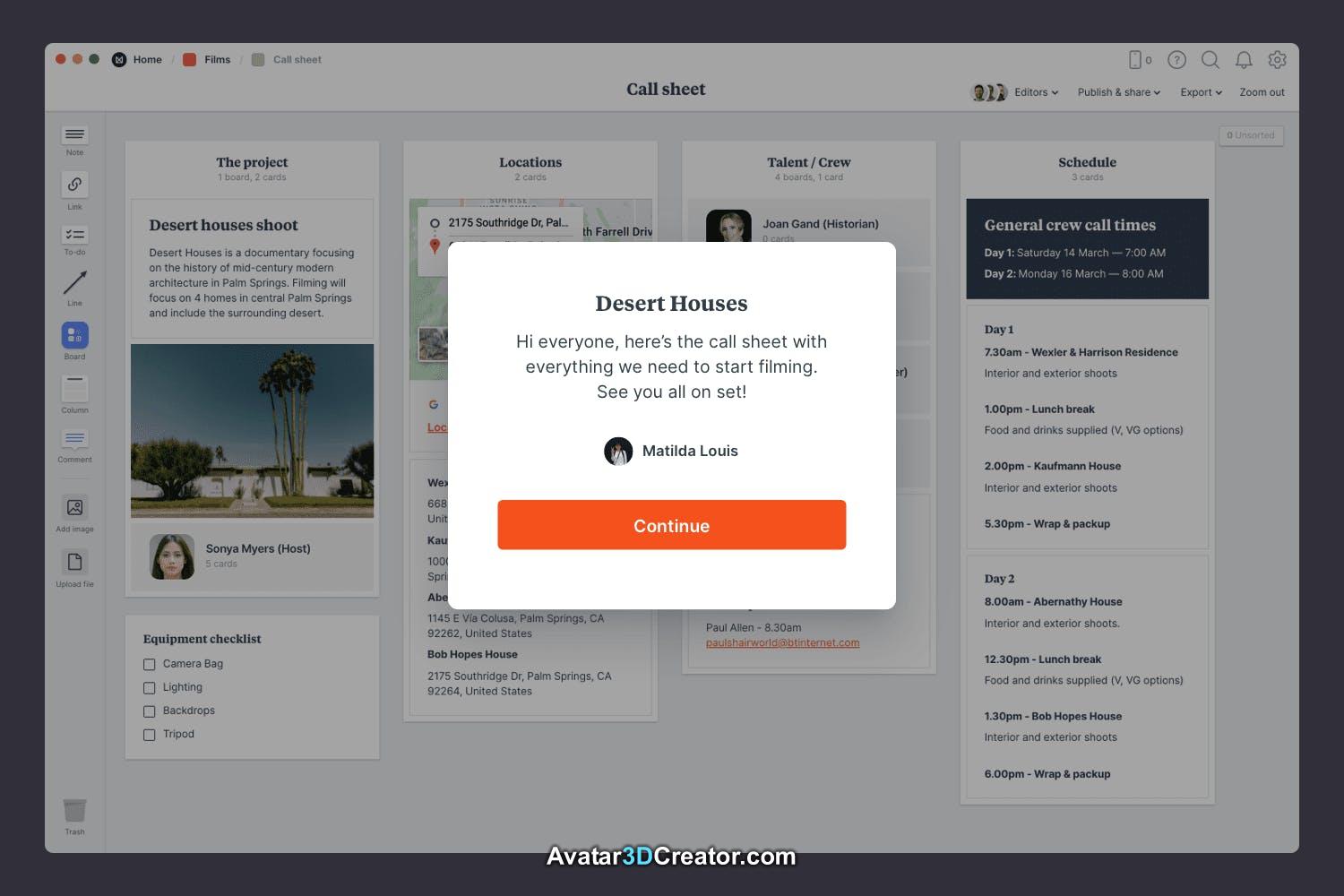
You’ll find the board to make your call sheet on the Pre-production Plan board. Double click on the Call Sheet to open it and start laying out a plan for the day of the shoot.
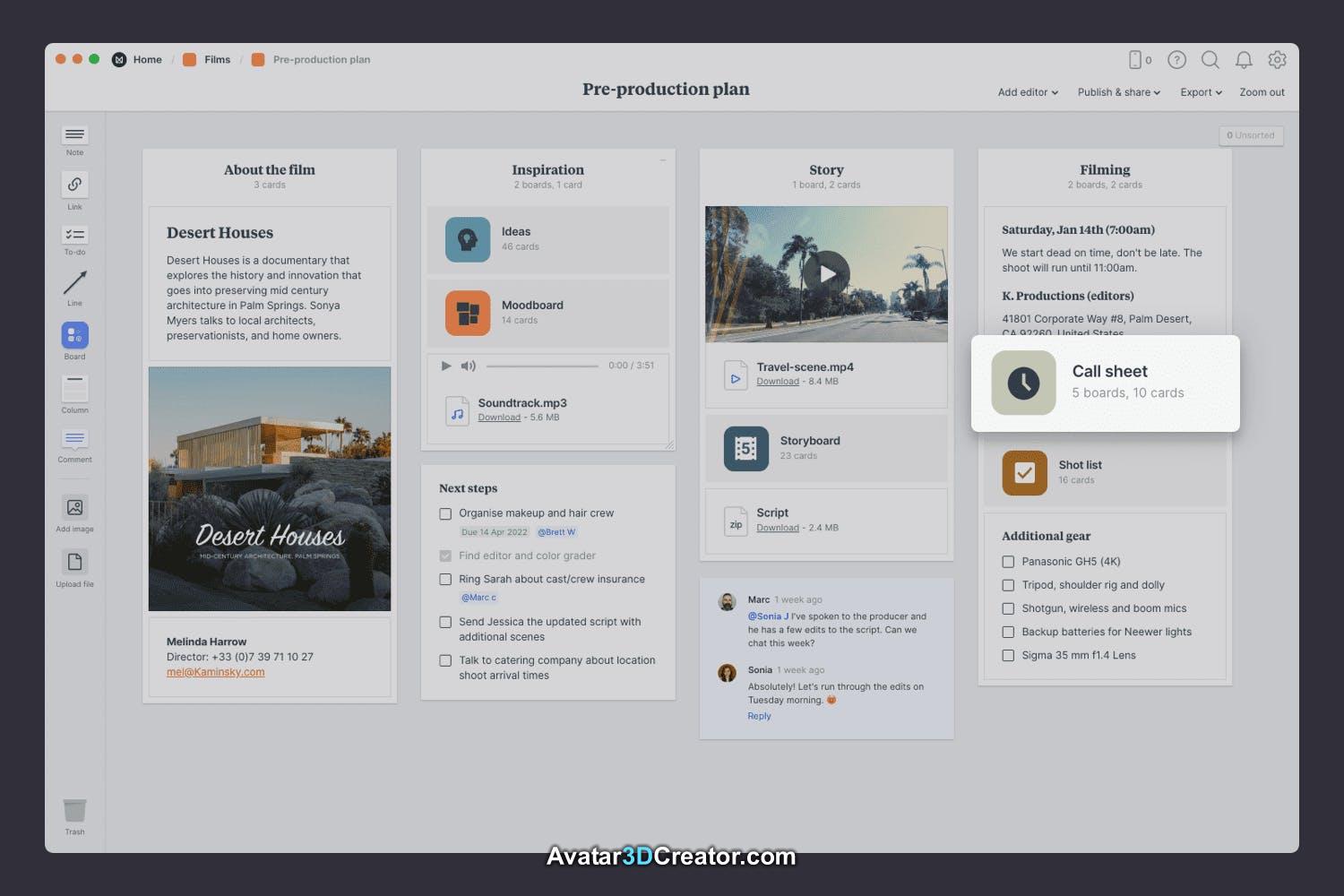
如何在米兰诺特执行此操作
- 双击Call Sheet 打开它的板.
Add the location and background information
Add background information about the shoot for your talent and crew. 下一个, add the location of the shoot and any details that will help people arrive safely and on time. Explain where the parking options are, nearby public transport and any details about to get into the building.
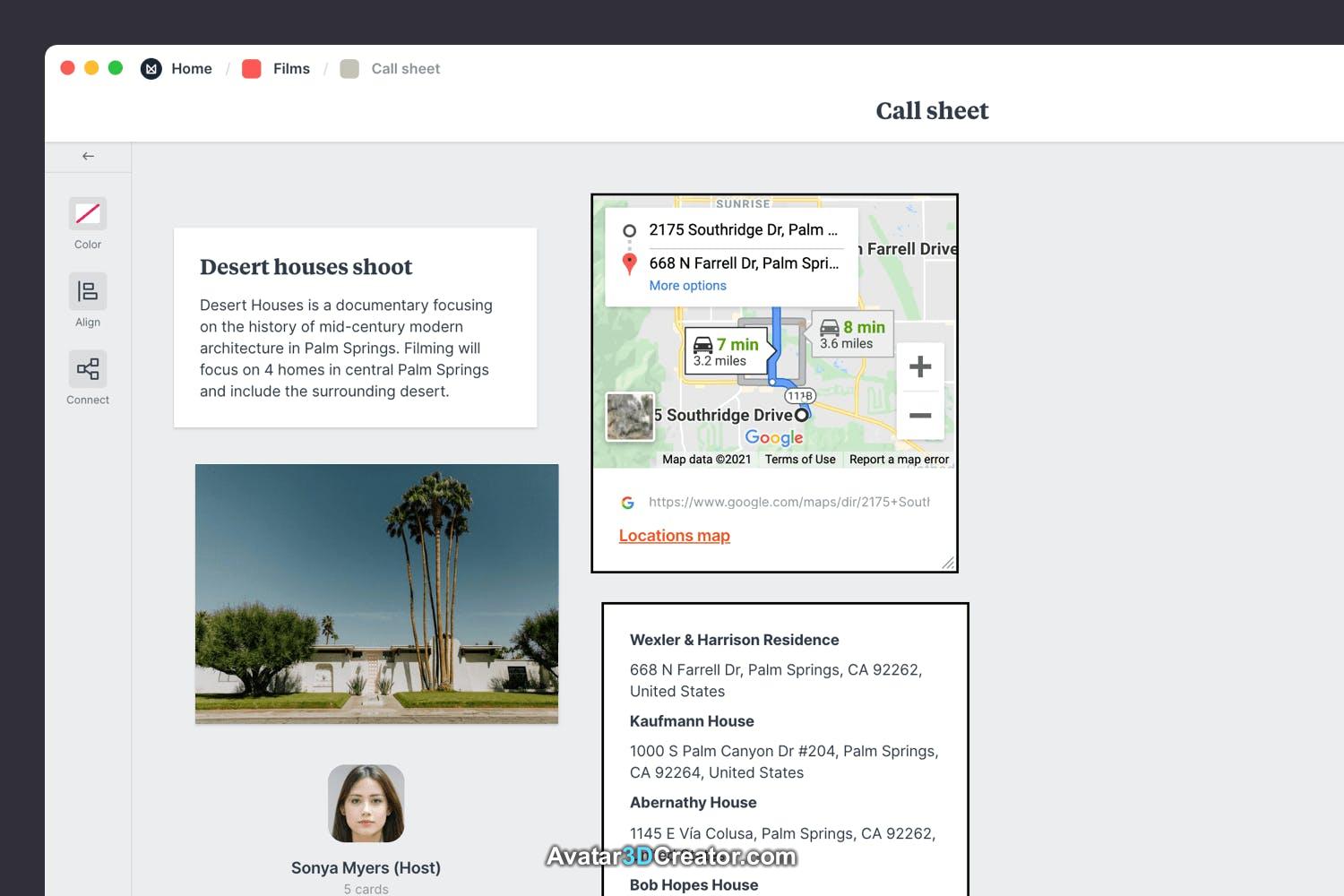
如何在米兰诺特执行此操作
- Add a note to describe the project.Show me how
- Embed a Google map to show the location.Show me how
List your talent & crew
Who’s involved in your shoot? List your talent and crew along with their contact details. This will save you hunting around for phone numbers when plans inevitably change on the day. 下一个, add any specific arrival times so each person knows exactly when they’re expected.
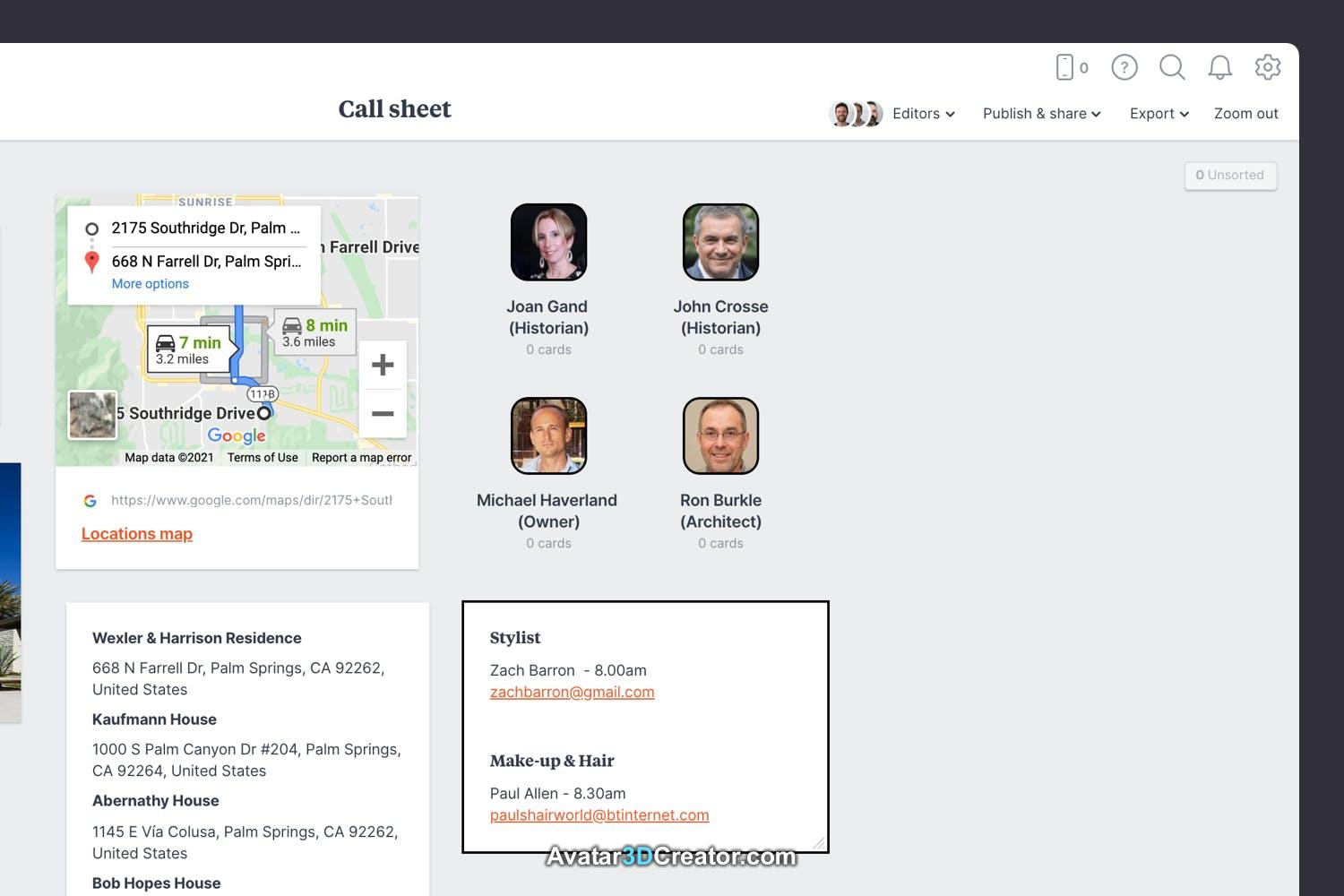
如何在米兰诺特执行此操作
- Add a note for the details of your crew.Show me how
Outline the schedule
Probably the most important part is the schedule—specifically the general crew call time. The general crew call time is when everyone needs to arrive on location. Under this, add the key events for the day so everyone can clearly see what’s on and when. Don’t forget lunch!
如何在米兰诺特执行此操作
- Add a note to describe each activity on the schedule.Show me how
Refine & share with your team
Once you have everything you need, it’s time to organize your call sheet so it’s easy to scan. Then share it with your team so everyone can start preparing for the shoot.
如何在米兰诺特执行此操作
- Create a column for each part of your call sheet.Show me how
- Publish and share the call sheet with your team.Show me how
You’re all done!
Hopefully, this guide has helped you become more organized during the pre-production stage. If you’re just starting a new shoot, use the Film Pre-production Plan template below to get set up in minutes.